

How to be a prize loser
My kids could no doubt give you a long list of reasons why their dad is a loser … my music taste … my dad dancing … my witty anecdotes ….
And I’ll insist there’s no shame in being a loser.
With the Olympics on the telly, there’s no shortage of valiant tales of athletes who’ve come back from incredible set backs, battling adversity and loss.
As traders, we’re often told about the need to be stoic in the face of loss … we need to ‘roll with the punches’ … ‘keep the faith’ … not ‘lose our nerve’ …. And there are plenty of times when this kind of resolve is needed.
But that’s not what I want to talk about today. I’m not talking about how to have a stiff upper lip when we hit a loss. Instead, I want to look at being so accomplished at losing, that we can walk away from the carnage almost unscathed, a bit like a stuntman who’s learned how to roll across the bonnet of a moving car.
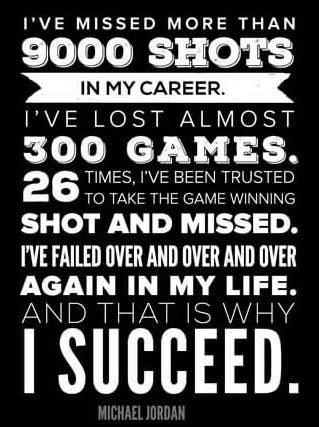 Let’s be blunt here … all trading methods will have losses – even the best ones. And many (even the best ones) can have a lot of losses (I’m talking 50% of trades, or more).
Yet most of us put a huge amount of effort into finding the best trading signals, to have the best chance of winning, to make the most money from those winners … And what we fail to focus on is: how to lose.
And seeing as losses will often account for about 50% of our trades, don’t you think it’s time we got a whole lot better at losing?
The standard ‘wisdom’ is to risk 2% of your fund per trade, so we pop our stop loss on, calculate our stake, and wait to see what happens …. But that 2% is your maximum – you don’t have to lose that! You could get smart and cut your losses on the go …
As a ‘prize loser’, I want to learn how to spot a losing trade fast, so I can get out of it for a minimal loss. But at what key moment does a winning trade turn into a losing one? When it hits our stop loss? Hopefully, we can do better than that … So, let’s examine where our losing trade goes wrong …
-
The gut feeling
No trade starts out as a loser, but more usually in a blaze of optimism. Yet, sometimes there can be a hint that something’s not quite right. You know those times … you’re following the rules of your system to the letter, but you just don’t like the look of this signal … the market seems too indecisive … there’s a piece of data coming out that’s got you on edge … or you just have a hunch ….
When this happens, make a note of it in your trade journal, it could be important data in spotting a pattern forming.
-
The cold, hard facts
Okay, so you’ve established your entry signal … what is it assuming the market will do? Think really hard about what the price could do that would negate that signal. Yes, hitting your stop loss should be one of those things, but there are probably others.
Let’s say you’re buying because you’ve spotted a momentum signal … then the market does nothing, or moves in the wrong direction … it would suggest that the momentum just wasn’t there and you should get out.
We’re often reluctant to admit our signals can be wrong, but – as we know – all signals get it wrong a fair bit of the time. How we handle those losses can make all the difference. Yes, we can handle them with gritty steel and stoicism, but how much better would it be to have a trading signal that comes with a built-in safety mechanism – something that rapidly spots when a signal was flawed, so you don’t have to suffer the pain of watching the market move against you?
So, how do we build this kind of safety valve into our trades, so you can cut your losses like a pro?
Of course, markets like nothing more than teasing us with a pullback, making us sweat, before moving towards our profit targets … so how is it possible to protect ourselves from duff signals, without jumping ship too soon?
It’s a tough one, but here are some tips …
- Get in after the pullback (You can find advice on this type of trade here.
- Trade on momentum, and get out when momentum falls away. (More on momentum signals coming soon!)
- Don’t be afraid to close for a small loss, but to get back in if the signal regains strength.
- Remember, most traders are guilty of leaving losses to run too long, and taking profits too soon. We’re at battle against the devil on our shoulder, telling us that our trade will ‘come good’. Set yourself strict rules for when to close a loss – and stick to them.
Every pound you can save on a losing trade is a notch in the right direction on your risk-reward profile. By accepting our failed signals fast, we’ll release capital, reduce risk, and ultimately become more profitable.


JOIN US ...
Get full access to members-only resources, plus my weekly email updates ...
I will NEVER share your details for marketing purposes. Privacy policy
Strategies I'm Using
 It has taken 2 years to persuade this market…
- These videos show how to make 24% gains in…
 As you can see from all the data I've…
 Get the low down on the Heikin Ashi Mountain…





3 comments
Mark Rose
Hi Laurie,
There are loads, I’ll write a piece about some as part as my Traders Bulletin email this week.
Regards,
Mark
Laurie
Thanks Mark. Momentum trading seems to be a core fundamental within any trading strategy. Could you please suggest a simple and solid momentum indicator (plus settings)?
Forexnut
Thought provoking stuff mark! Look forward to hearing more about momentum trading