

12 vital bear market tips
As one journalist put it this week: As if it weren’t bad enough being mauled by a bear market, we have to get mauled on a rollercoaster as well.
The thing about bear markets is that they always come hand-in-hand with a rollercoaster ride, so we shouldn’t be shocked by current market volatility. There’s absolutely no reason that you can’t do very nicely out of this ride – but you do need to make some adjustments to your trading style. Take heed of these 12 key facts, and you’ll be ready to make the most out of the coming months …
• 1 •
First off, bear markets and volatility are a completely natural part of the economic cycle – we needn’t panic. Stay calm, and prepare. Volatile markets can offer the very biggest money-making opportunities. Keep your cool, and you could make a lot of money in the coming months.
• 2 •
While they are normal, bear markets aren’t dominant – over the past 200 years, the stock market has risen more than it’s declined. Since 1929, the US stock market has experienced 25 bear markets, an average of one every 3.4 years. The last bear market ended March 2009, so statistically, this is overdue.
• 3 •
Bull markets have lasted on average 31 months, with gains made of between 21% and 582% (an average of 107%). Bear markets have lasted on average 10 months. The smallest bear market fell 21% in 1949; the worst drop was 62% in 1931–32.
• 4 •
I’m confident that all Bulletin readers are old enough to have lived through the last two bear markets: the 58% fall of 2000–02 and the 57% drop of 2007–09. How did you fare back then? Are there things you wish you’d done differently? There are plenty of reasons to believe that the current bear market won’t be of this scale.
• 5 •
Resist knee-jerk reactions to sudden price moves and recent activity. As long as you’ve planned through your risk tolerance, you should be able to act calmly in any market situation.
• 6 •
If you own stocks, you can hedge these rather than go to the expense of selling and re-buying. Focus on larger blue-chip stocks, which can continue to bring you an income via dividends.
• 7 •
Seriously consider the level of risk you’re comfortable with. Volatile markets go hand in hand with words like “maximum drawdown” and “maximum pain” – be realistic now about what kind of risk you’re prepared to take, and where you’ll get out. If you wait until you’re feeling that ‘pain’ – your decision-making processes will be hampered. If volatility is making you feel anxious, there’s no reason not to reduce your risk by cutting back on your staking levels – trading isn’t an extreme sport – you need to be able to sleep at night!
• 8 •
Are your stops too tight? This will quickly get you knocked out of trades in volatile markets. A quick way to check this is to look at the ATR. Look at how the ATR has changed over the past year, and consider adjusting your stop accordingly – remembering that a wider stop must have a lower stake, otherwise you’re increasing your risk.
Here you can see how the ATR for the S&P was mainly below 20 for the first half of last year, but has been almost continuously above this level since last August.
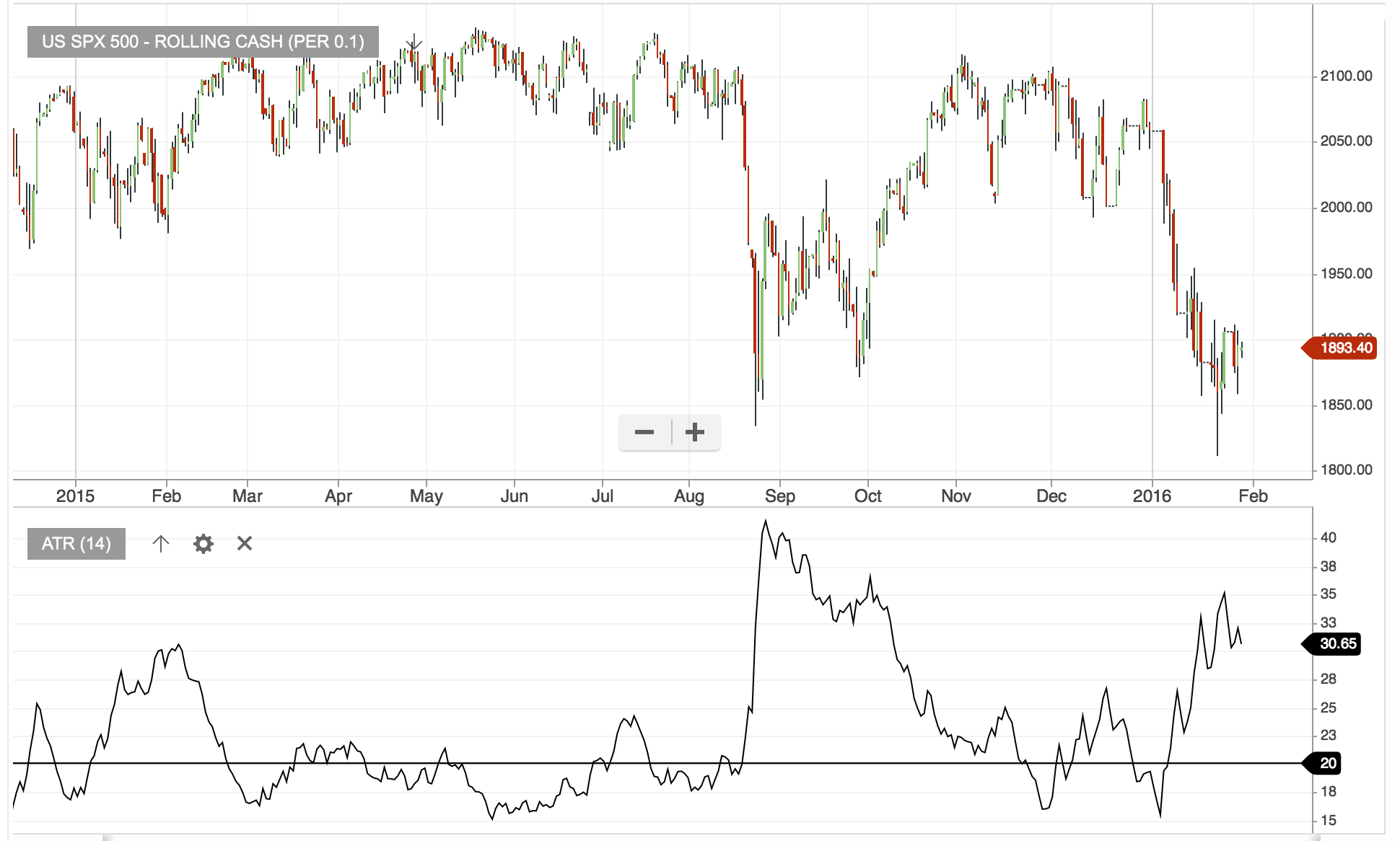
For example, if you’re widening your stops by 50%, your stake should be 2/3 its original size. (I.e. if your stop moves from 30 to 45 points wide, then a stake of £3 would become a stake of £2 to keep the same risk.)
• 9 •
Are your profit limits too modest? Just as we should widen our stops, we can also consider widening our profit targets. Again, look at the ATR for the timeframe you’re trading to judge this.
• 10 •
Try not to obsess about predicting a market bottom. Pundits will send out daily predictions for the beginning of the next bull run. The canny investor trades what they see on their charts, not what they ‘think’ will happen next.
• 11 •
Bear markets are a great opportunity for long-term investors to stock up at lower prices. This is especially true if you’re young, or if you’re looking to provide wealth for your children or grandchildren. Don’t fall into the trap of waiting for a bottom to grab a bargain – scale in over the coming months to spread your risk.
• 12 •
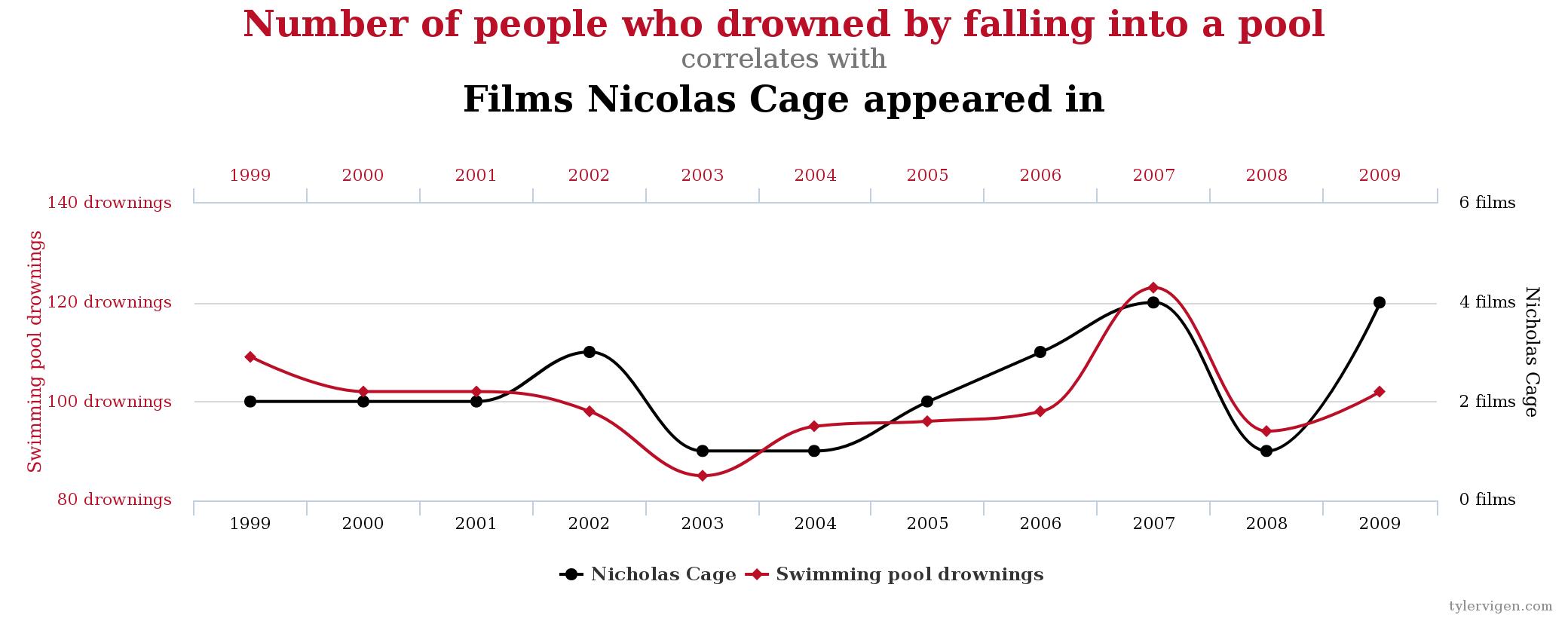
Watch out for dodgy correlations. I know its weird, but there are few things that get me as excited as a good market correlation – trading two markets that move in unison is one of the best, and safest, ways to make money. When prices move suddenly, it tends to send ripples around global marketplaces. The result is that we’ll often see big price swings across several markets, as they move in unison … and, before you know it, experts are telling you that X correlates with Y, and a move on X will predict a move on Y.
The big culprit I see for this right now is oil.
At the moment, oil prices are getting the blame for everything.
Back in 2008, oil prices plummeted, and so did the stock market. Oil prices are falling now, so stock markets will too …
Right?
The chart below shows the 12-month correlation between oil and the markets – there’s no denying, it’s significant. But look at the chart on the right – over the last 10 years, this correlation evaporates.

And – just in case you weren’t awake in the back row – this isn’t 2008. In the last downturn, oil prices were falling because of a fall in demand. This time oil prices are falling because supply has increased. Demand is less than expected, but not falling.
It’s a different beast. So, be wary of pundits making stock-market predictions based on the oil price – this is not a correlation to put your money on. Just as a lull in Nicholas Cage’s acting career is no reason to be complacent around swimming pools …
I hope I haven’t put the fear of god into you about bear markets – this is a genuinely exciting time to be in the markets, and there are plenty of amazing trading ideas coming up in Trader’s Bulletin.

JOIN US ...
Get full access to members-only resources, plus my weekly email updates ...
I will NEVER share your details for marketing purposes. Privacy policy
Strategies I'm Using
 It has taken 2 years to persuade this market…
- These videos show how to make 24% gains in…
 As you can see from all the data I've…
 Get the low down on the Heikin Ashi Mountain…





3 comments
Darin
I work at a pool…….haven’t seen Nicolas Cage here yet though… 🙂
Rachael
Like the Nicolas Cage correlation example 🙂
Mark Rose
Thanks for your comment Rachael. These great correlation graphs come from Tyler Vigen’s brilliant research (http://tylervigen.com/spurious-correlations). Worth checking out his site just for a lesson in how bonkers correlations can get!