Currency in focus: how to trade AUD

I’m a dyed in the wool technical trader, which means that I focus my analysis on charts, charts, charts. As far as I’m concerned, trying to judge which way fundamentals will drive prices is losing game.
However, that doesn’t mean we shouldn’t be aware of the driving forces behind the markets we trade. This knowledge prepares us for volatility and changing directions, so we aren’t caught on the hop.
A dive into the Aussie Dollar
The Australian dollar is sometimes known as the ‘commodity currency’ because of the country’s dependence on mining and the value of energy, agricultural products and precious metals.
An increase in the price of iron ore, typically leads to higher export prices and a demand for more Australian dollars to require the same amount of Australia’s commodity exports.
A large increase in commodity prices from the mid-2000s through to 2013 led to significant inflows of foreign investment to help expand the production capacity in Australia’s resources sector. The Australian dollar appreciated significantly during this period, reaching a record high of A$1.10 against the US dollar in 2011. This reflected the increased demand for Australian dollars and the more positive economic outlook for Australia relative to other countries.
Until 1983, the Australian dollar was pegged to other markets – first with gold/Sterling, then the US dollar, then to an index, then it became what’s called a ‘crawling’ peg, before ultimately the Royal Bank of Australia (RBA) took control and the currency was floated. This means that value of the currency is also affected by intervention from the RBA.
In recent times, the RBA’s very dovish policies means that their public announcements haven’t ruffled many feathers, and go largely unnoticed by investors. The next meeting is at the beginning of next month.
And what’s driving AUD prices right now?
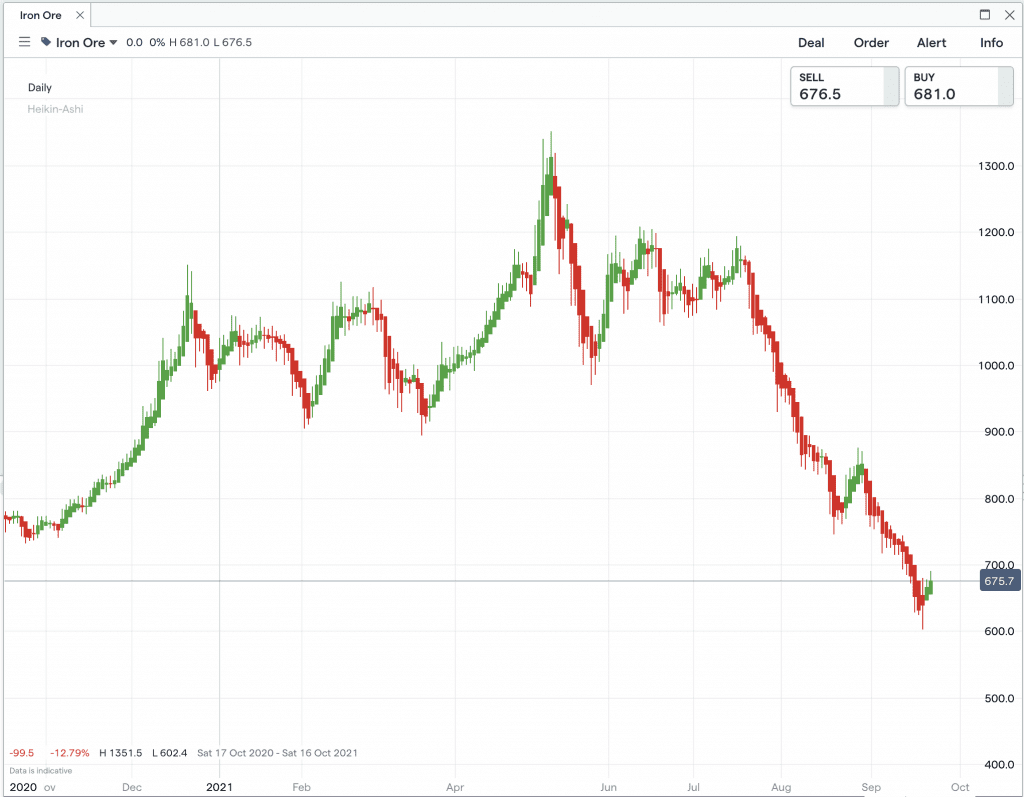
Right now, the big concern for the Australian dollar is a slow-down in China and reduced demand for iron ore. News midweek that Evergrande could be getting a bail out gave the currency some relief, but when the property giant missed a payment deadline overnight, those gains fell back.

It’s worth comparing this chart with the iron ore price over the same period, to see just how they move together …
And there’s a hidden divergence you may have missed …
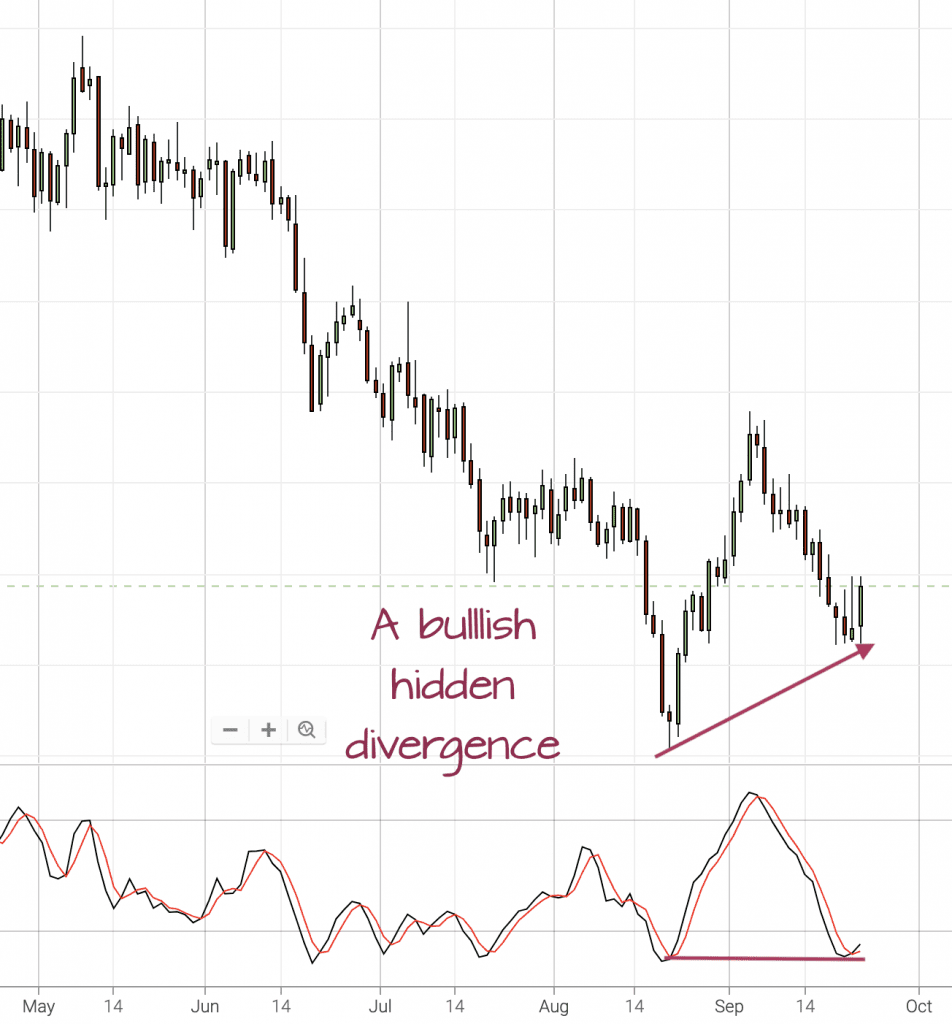
We have a higher low on the price chart, combined with a low on the Stochastic indicator which is largely the same as the previous one – this is a bullish technical sign.
But jitters about the state of the Chinese economy will continue to rattle the AUD cage.
And for the future …
The story that will affect this currency in the coming years is brewing thousands of miles away in the forests of Guinea, West Africa. Here Chinese investment is due to bring online huge iron ore mines, cutting their dependence on Australia, with huge implications for the economy and demand for the Aussie dollar.
We can expect to hear much more about this as a driver for the currency in the future.
To enjoy more content and get it faster Follow @TradersBulletin


JOIN US ...
Get full access to members-only resources, plus my weekly email updates ...
I will NEVER share your details for marketing purposes. Privacy policy
Strategies I'm Using
 It has taken 2 years to persuade this market…
- These videos show how to make 24% gains in…
 As you can see from all the data I've…
 Get the low down on the Heikin Ashi Mountain…