The Canadian dollar is sometimes called the loon or loonie, because of the image of the bird on its back. But money in Canada has had many other forms …
Europeans arriving in the seventeenth century, found a form of monetary system based on shell beads woven into belts. These were quickly usurped by French, Spanish and English currencies, and even playing card money, which were literally playing cards valued and signed by the governor of the colony. It wasn’t until the middle of the nineteenth century that the Canadian dollar came into being. And the Bank of Canada was founded in 1934.
How to trade CAD: drivers for the Canadian dollar
In terms of GDP, Canada is tenth in the world, but the standing of the Canadian dollar in the currency markets in grounded in Canada’s status as a major exporter of petroleum, minerals, wood and grains.
The Canadian economy is generally regarded as a very stable one. Canada’s population is relatively young, and its liberal immigration system means that concerns about an aging population aren’t as worrying as in many developed countries.
Canada’s tight trading relationship with the US, means the Canadian currency is closely tied to US fortunes. But the real driver of the Canadian dollar is oil.
Canada is the world’s fourth largest oil producer, behind the US, Russia and Saudi Arabia.
How to trade CAD: currency correlations
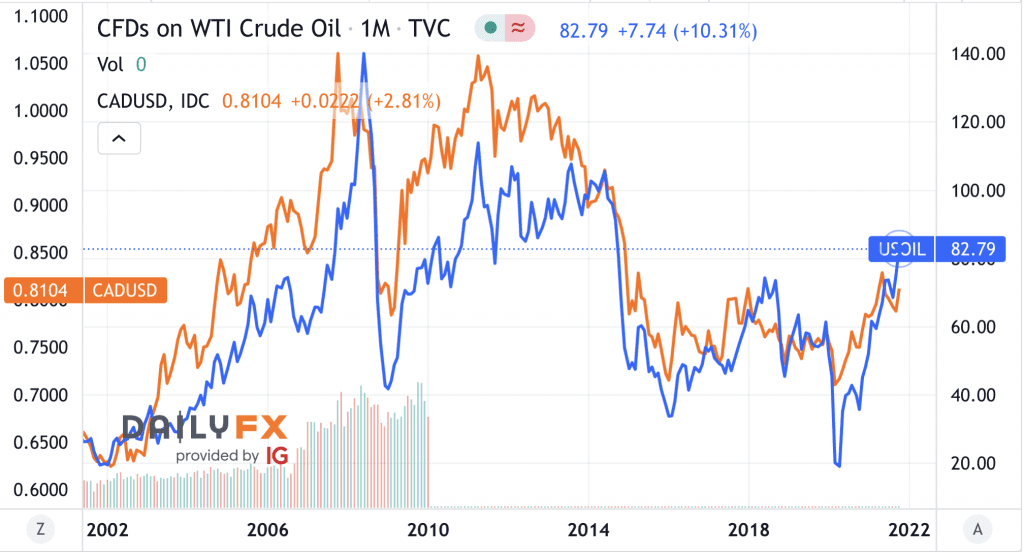
Here we can see how closely tied the value of the Canadian dollar (in blue) is with the price of oil (in orange) …
When the cost of oil goes up, demand for Canadian dollars increases (to buy that oil), and we see the currency value surge.
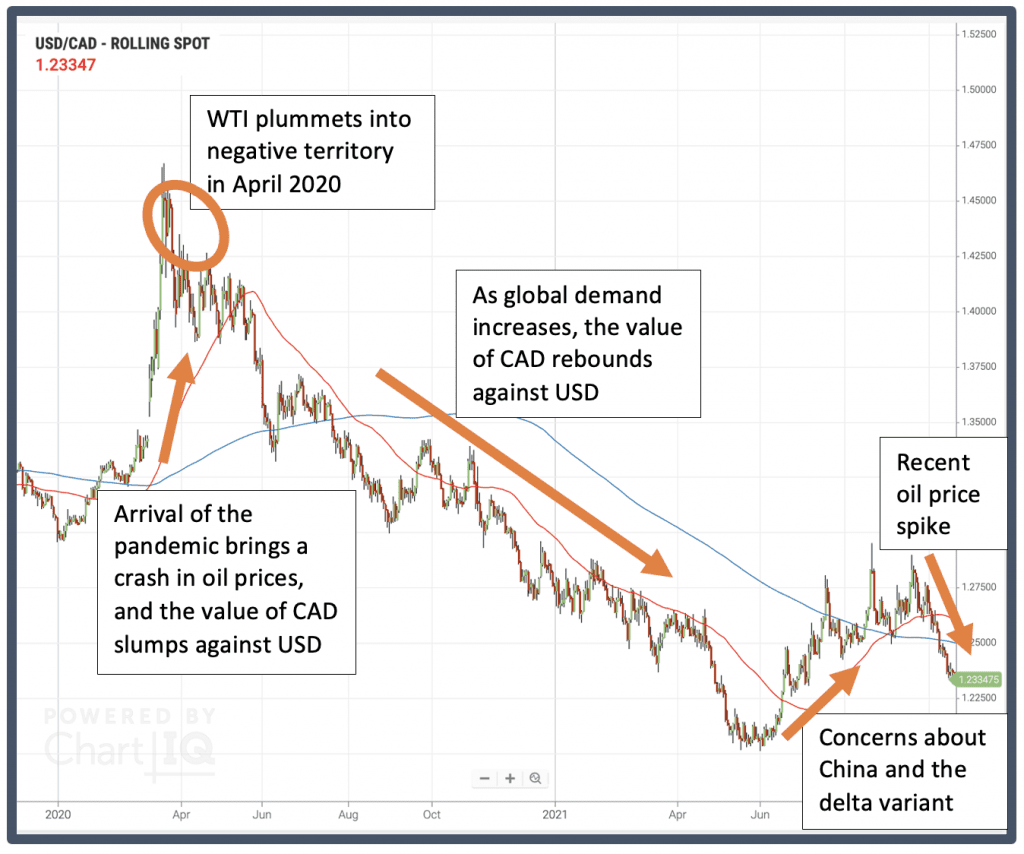
The chart below shows the turbulent story of oil prices over the last couple of years clearly played out in the USDCAD price, with the value of USDCAD surging each time the value of the Canadian dollar is hit by oil prices dropping …
How to trade CAD: currency pairings
USDCAD is one of the top ten most trading currency pairs on the planet, and is the most common way to trade the Canadian dollar. But, of course, prices of this pairing are also affected by the state of the US economy and decisions taken by the Fed.
Forex traders looking for a purer play on oil, tend to opt for CADJPY.
With Canada producing a lot of oil, and Japan importing all its oil, this is a more straightforward oil-backed pairing.
So, where next for USDCAD?
If you’re tempted to see the Canadian dollar as a safe pair of hands to put your money in, it’s important to be very aware of its tie to oil prices, and the volatility that brings with it.
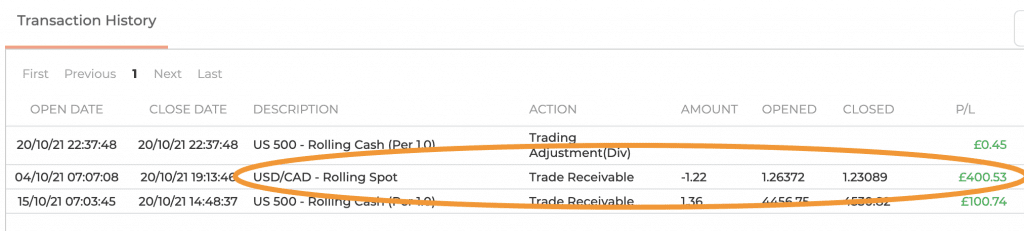
At the moment, the downward trend of this pairing feels well-established, as the value of the Canadian dollar strengthens. It’s a move that we’ve taken advantage of recently with Heikin Ashi Mountain …
Although it’s worth noting on the chart that the 50MA is still riding above the 200 MA, and there’s strong support to aim for at 1.20 – we haven’t seen prices below here since 2015.
And, of course, having a long position on the Canadian dollar could be seen as a hedge against our rising fuel bills this winter!