Points and pips explained (so you never make a decimal error)
If you’ve ever made a decimal-point error in your trading, or scratched your head wondering what a pip is … you’re in good company.
With brokers adding extra pipettes and quoting down to 6 decimal places … and each platform presenting data in different ways, it’s too easy to confuse a price or make an error when keying in numbers.
Decimal point errors are a serious business. They cause scores of deaths in hospitals and pharmacies as patients are given 10x the dose of a medicine … they create havoc on accountants’ spreadsheets … and they can give Forex traders some very nasty surprises.
If we better understand what we’re looking at and the actual value of the instruments we’re trading – we’re a lot less likely to make these mistakes.
Pips explained
Literally, ‘pip’ means ‘point in percentage’. Information which does very little to clarify what it actually is!
A pip is the measurement of movement in forex trading and is used by investors to define the change in value between two currencies. Traditionally, most currencies were quoted to four decimal places, and a pip was equivalent to a move of 0.0001.
These days, many platforms quote currencies to 5 or 6 decimal places, so it can easily get confusing.
Add to this, there are some currencies in which a pip means a 0.01 move (these are any pairs containing the Japanese Yen).
So, if the GBPUSD price moves from 1.3880 to 1.3890, that’s an increase of 10 pips.
But if the USDJPY price moves from 109.21 to 109.22, that’s an increase of 1 pip.
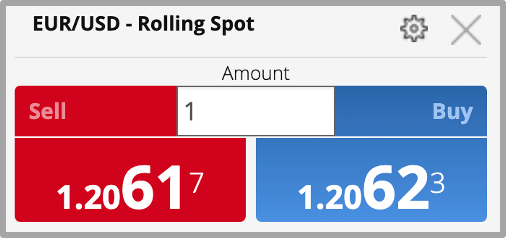
Just as you’ve got your head around that … the issue comes when you open up your trading platform, and the prices look like this …
Some of the numbers are shown to 5 decimal places, some (the JPY pairs) to 3 places.
One of the prompts many platforms use, is to have slightly larger digits, to remind us where the pip units are …
Looked at like this, most major Forex pairs are valued in the 10,000/20,000 range. If you’re trading an instrument outside this range, then you’re looking at a relatively small or large instrument.
You can also confirm pip size by clicking on the ‘info’ button for each instrument. Most trading platforms have one, which will tell you if you’re trading per ‘0.0001’ or otherwise.
Points explained
While Forex markets are valued in pips, stocks and indices are measured in points.
The scale of these markets can vary enormously, from penny stocks up to global indices, like Wall St, currently valued at over 34,000 points.
The variation in how stocks and indices are presented across platforms is also more significant. Sometimes decimal points are moved, and a point might be worth 1.0 move on the price, or 0.1, or 0.01.
In terms of how much money you make for a price move, this will be the same, but it can make a big difference in margin requirements, spread costs and minimum stake sizes – so if you’re concentrating on index and share trading, compare different brokers – it could have an effect on your profitability.
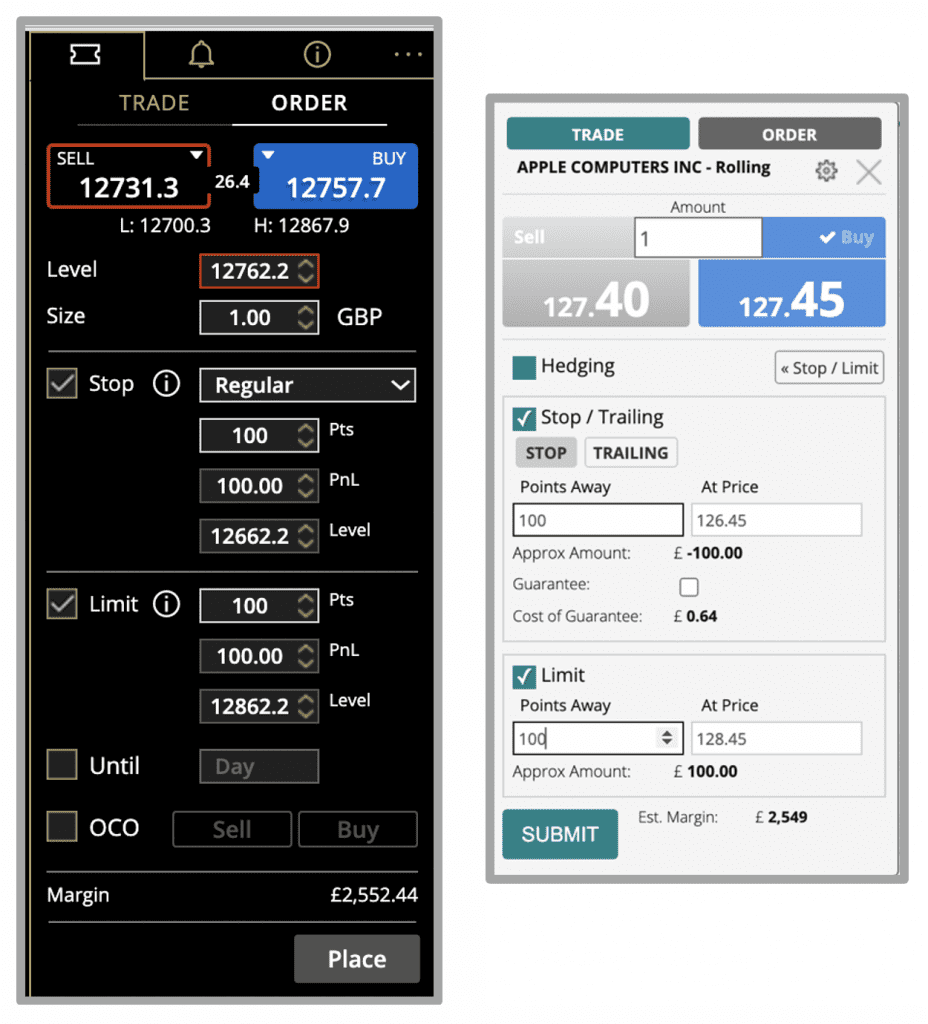
Here are a couple of examples … Take a look at these two trading tickets. The one on the left is from ETX, the one on the right from Corespreads (now called Trade Nation)…
ETX shows the Apple share price as around 12,740, while Corespreads/Trade Nation shows it as 127.40. However, the point value remains the same, so the position sizes are the same, and the margin requirements match. (Note the big difference in spread costs, however – with ETX, you’re paying over 26 points; with Core Spreads, you’re paying just 5 points.)
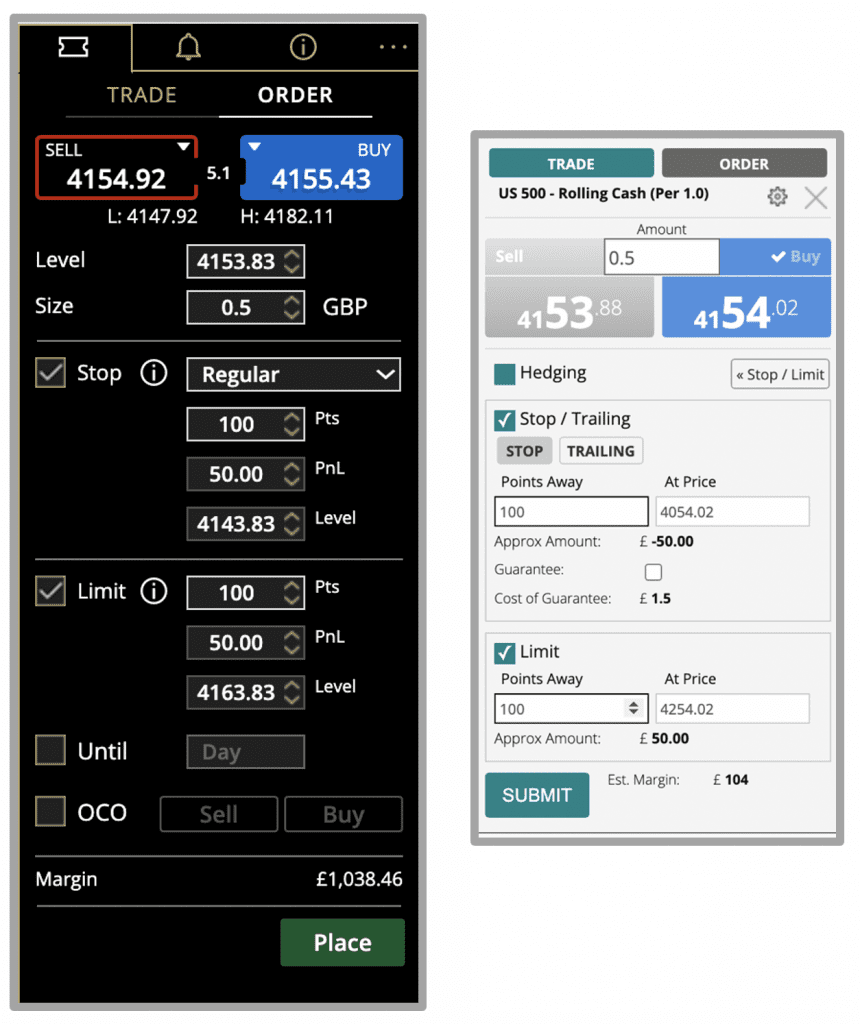
In this next example, we have the S&P500 compared on the two platforms …
The prices look the same, but on ETX, you’re trading every 0.1 price move, while on Core Spreads/Trade Nation, you’re trading every 1.0 price move. These are two very different trades – and note the huge difference this makes to your margin requirement on the two platforms.
I don’t want to get too bogged down in the technicalities here, but I do want to stress that, if you’re trading indices or stocks – check the size of a point that your broker applies, rather than rely on where they’ve decided to put the decimal point.
How to avoid errors
Click on the info button for an instrument, which should tell you the increments you’re trading in.
Watch out for “per 0.1” in the name of an instruments, which tells you that you’re not trading in full 1.0 points.
Get familiar with the markets you’re trading (i.e. don’t trade too many instruments). The better you know the markets you’re trading, the more easily you’ll spot something that looks not quite right.
If you’re trading Forex pairs, remember that they are likely to be in the 10,000–20,000 ball-park.
Most platforms will calculate your risk and margin requirement for a trade on the ticket – double-check these figures are what you’re expecting before you hit ‘buy’ or ‘sell’.
And, if you do make an error – jump out fast to minimize your risk (rather than waiting for the price to come back to breakeven).
Any questions on this, please post them below and I’ll do my best to answer them. And of course, please share your stories of when this has happened to you!
The closest we can come, is to check the margin requirement, which should be displayed somewhere on the trading ticket before you hit enter.
Of course this does mean you have to have an idea of what your margin requirement for the trade is in the first place, but this is no bad thing.
If the margin requirement for the trade is very big (normally this sort of mistakes equates to a 10x multiplication of stake/margin), then this should be a signal to recheck the trade details before hitting enter.
Very important article, because yes these pip size conventions can be very confusing, My own approach is to check my in-running P&L immediately after initiating a trade, If it’s just a few quid below zero because of the spread then all is fine, but if it’s suddenly double or triple figures below zero then that’s a big red flag for me that something’s gone horribly wrong, I wish they would all offer us this particular information before we trade, to help us avoid such errors










5 comments
Phil
Thanks again Mark
john John
Good article.
Thanks
Mark Rose
Thanks for the feedback John. Always open to suggestions of topics you’d like me to cover.
Mark Rose
Hi Phil,
The closest we can come, is to check the margin requirement, which should be displayed somewhere on the trading ticket before you hit enter.
Of course this does mean you have to have an idea of what your margin requirement for the trade is in the first place, but this is no bad thing.
If the margin requirement for the trade is very big (normally this sort of mistakes equates to a 10x multiplication of stake/margin), then this should be a signal to recheck the trade details before hitting enter.
Kind regards,
Mark
Phil
Hi Mark
Very important article, because yes these pip size conventions can be very confusing, My own approach is to check my in-running P&L immediately after initiating a trade, If it’s just a few quid below zero because of the spread then all is fine, but if it’s suddenly double or triple figures below zero then that’s a big red flag for me that something’s gone horribly wrong, I wish they would all offer us this particular information before we trade, to help us avoid such errors
Phil