The standard wisdom in trading the forex markets is … look for the most action … look for lots of liquidity … lots of volatility … and jump in, hoping to catch some of those big moves.
So, if we’re trading forex, we should confine ourselves to the London or US sessions, when the lion’s share of the action is going on.
And, as well-behaved, humble mortals, trying to eke out a living from the markets, we follow this ‘wisdom’.
And yet, there are stats showing that traders of the Asian session are consistently more profitable than those in other sessions … so, what’s going on?
I’d like to challenge that ‘volatility myth’, and take a fresh look at the Asian markets, and some unexpected benefits they have to offer us …
How to join the midnight traders who are stealing profits on you
Malcolm Gladwell wrote an interesting article a few years back about the myth of the successful entrepreneurial risk-taker. What Gladwell showed was that these larger-than-life characters might appear to be dynamic gamblers – the kind of people who’d risk their home on a bright idea, or invest all their capital in some start-up … but, in fact, behind the scenes, successful entrepreneurs are carefully and meticulously removing risk from situations.
Successful entrepreneurs were shown to be deeply conservative.
Likewise, being a successful trader is about removing risk. All strategies get it right some of the time … and all will get it wrong some of the time. A huge part of what differentiates a winning strategy from a losing one is how it deals with risk in the bad patches.
And one way to reduce risk in our trading is to look at less volatile markets.
Sure, the Asian session doesn’t see the huge pip moves that we see in the London and US sessions – but there’s plenty of movement for us to make a living off!
3 things you may not know about trading the Asian session
It’s less volatile than the European or US sessions, and tends to be more range-bound, which means that oscillator signals can work better in the Asian session.
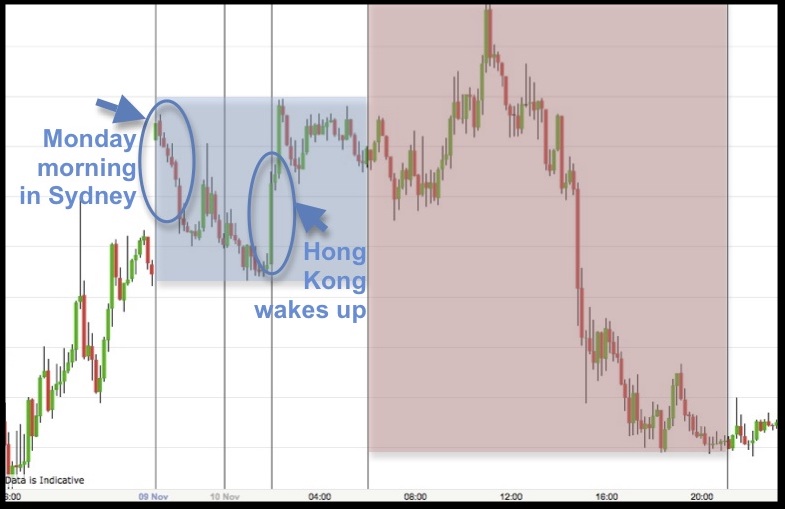
When Sydney opens on a Sunday evening, it represents the first chance traders and financial institutions have to rebalance after any action that’s taken place since Friday afternoon. This can cause a big flurry of activity.
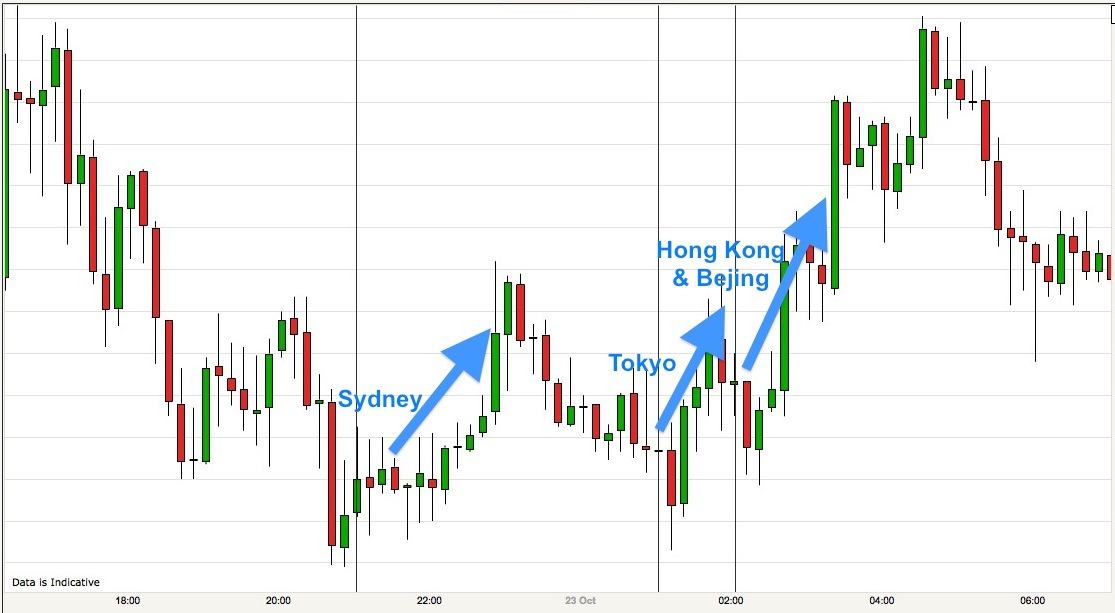
The timing of volatile periods is very predictable through the Asian session – i.e. when New Zealand, Sydney, Seoul, Hong Kong and Singapore come online. When the banks open in these markets we see a flood of overnight money coming online – and a sudden surge of activity.
Predictable patterns = trading opportunities
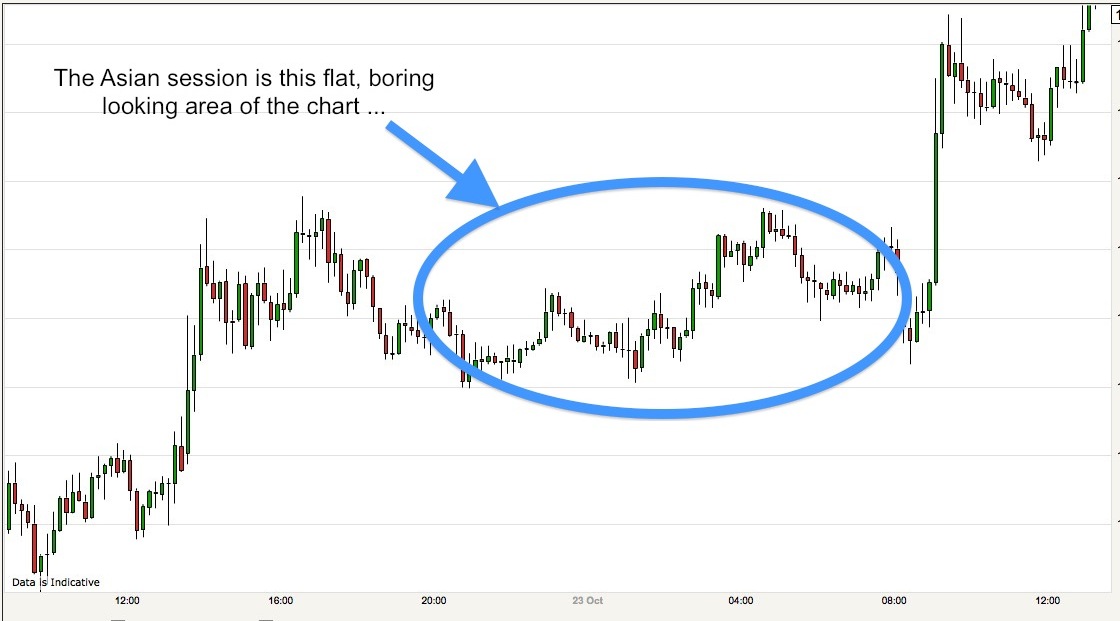
Take a look at these charts …
But when we zoom in on it, we see clear spikes of volatility as banks across the region ‘wake up’ and bring their overnight money into the market …
But you don’t need to be trading Asian or Pacific currencies to trade the Asian session. Take a look at EURUSD …
The chart above clearly shows the big difference in the pip range between the Asian and the US/European sessions.
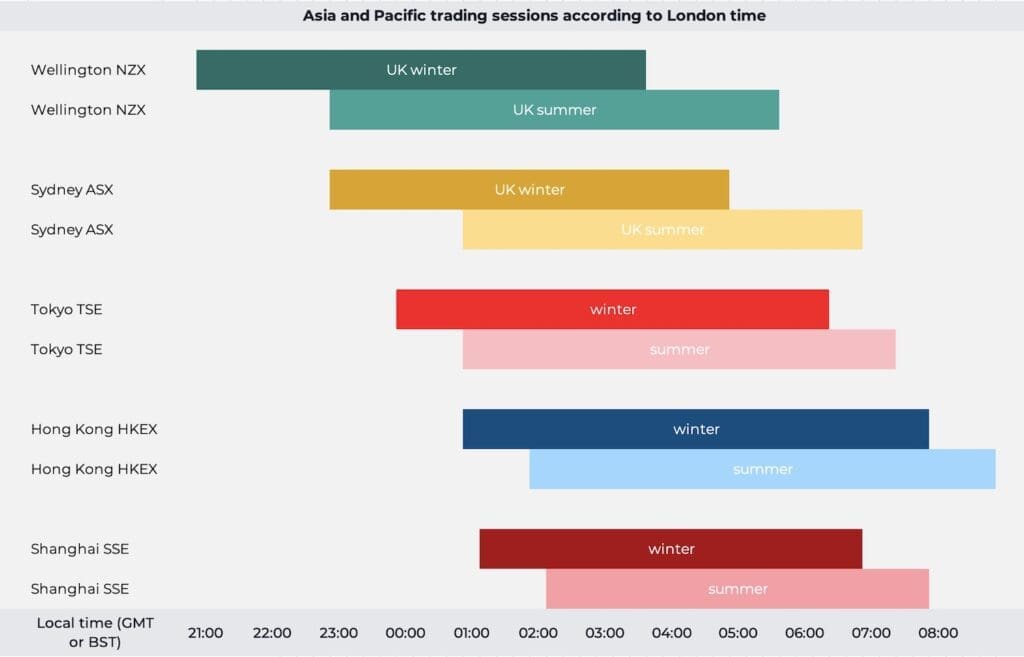
Here’s the through-the-night schedule for the Asian markets
Note that time shifts change depending on daylight-saving hours, and for countries in the southern hemisphere, this can mean a shift of two hours between summer and winter trading times.
Screenshot
What about sleep? I hear you ask …
Personally, the Asian market is when I usually have my head on the pillow, but I know that many other traders are confirmed night-owls. And, even if you don’t want to be up all night, there are still set-and-forget strategies you can put into action before you go to bed that can take advantage of ranges you spotted on the charts.
However, I promised some techniques you could use in the early hours of a Monday morning …
3 Strategies for the small hours
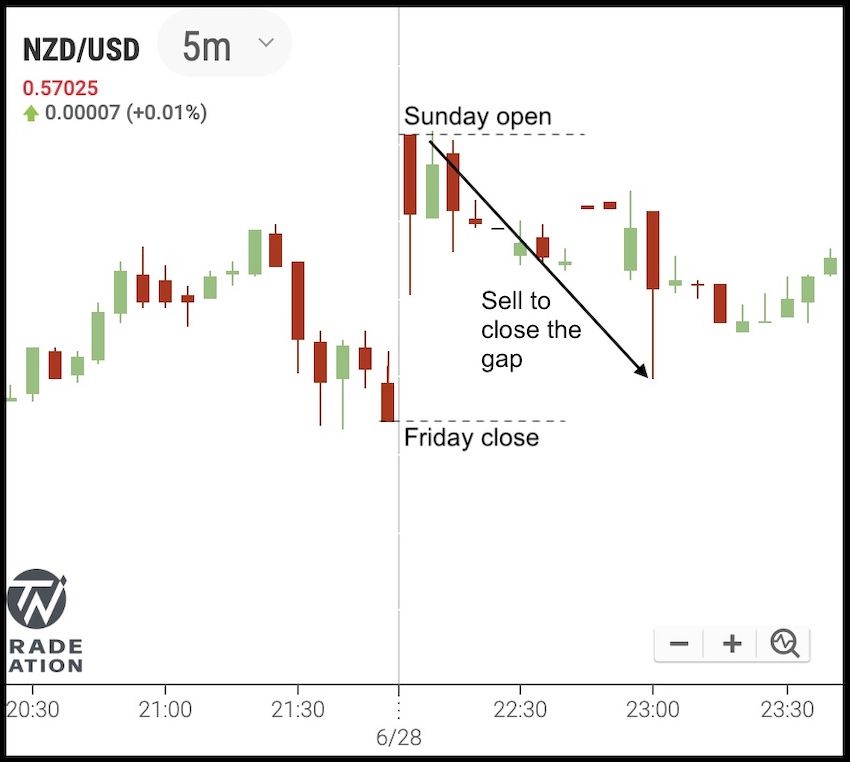
Fade the gap
Trading Asian or Pacific Forex pairs, against each other or against the USD. Mark up Friday’s closing price, then watch for where price reopens on Sunday evening. If there is a gap, and there’s not been any significant news over the weekend driving a move, then the setup is to trade the closing of the gap.
This is a simple setup, but can get snarled up with widening spreads and jumpy pricing as markets reopen after the weekend, so beware.
2. Opening range breakout
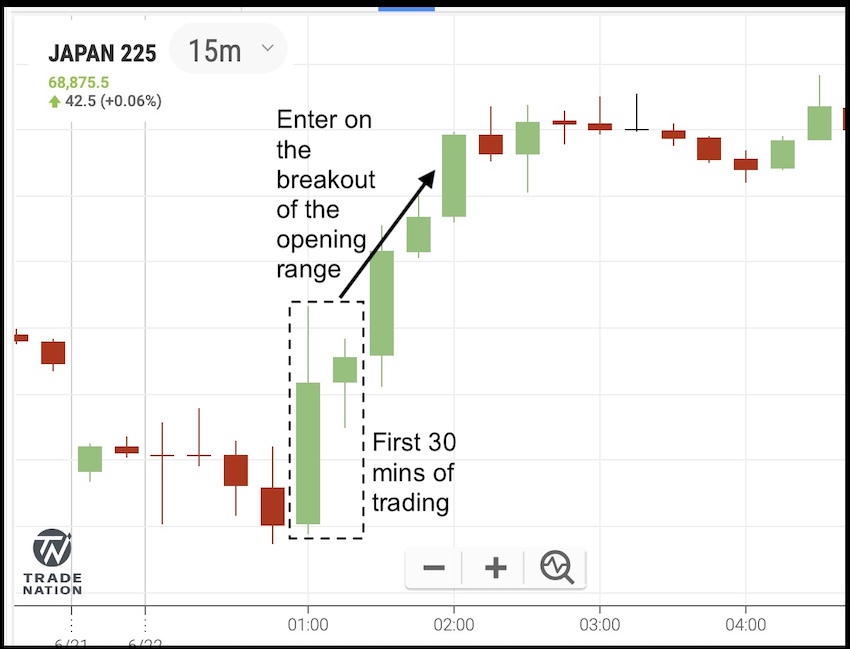
Another simple setup, but waiting until a little later, when prices and spreads should have calmed down. This can be done on the Japanese or Pacific indices, in the first half an hour after they open.
This is a classic opening-range breakout. Wait for 30 minutes for an opening range to form, then enter on the breakout of that range …
3. Opening range pullback
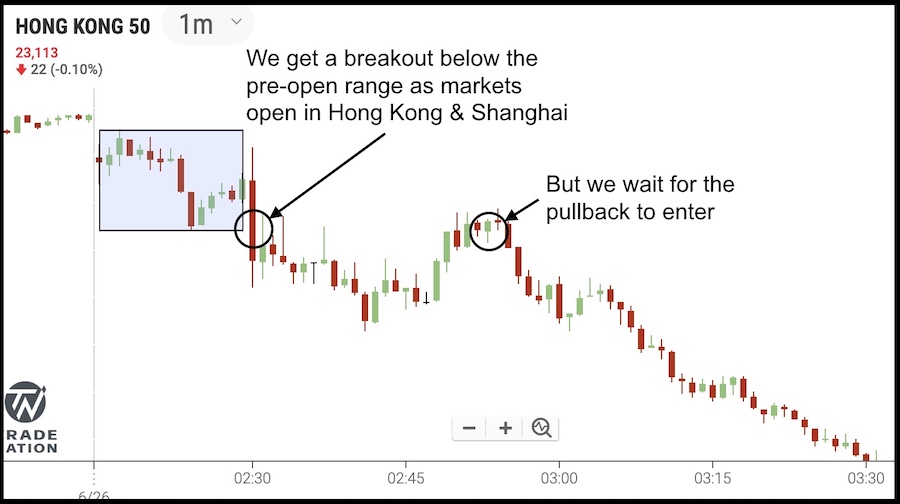
Hong Kong and China represent significant liquidity coming into the markets at 2.30am (British summer time) or 1.30am GMT. So, rather than jumping on the first breakout here, we’re waiting for a retracement back to the pre-open range before we take the move. This gives confirmation that the breakout level is being accepted.
This is a good setup to combine with some momentum signal or reading price action.
Watch out for this big player …
The Bank of Japan.
The BoJ has a bit of a reputation for monetary intervention.
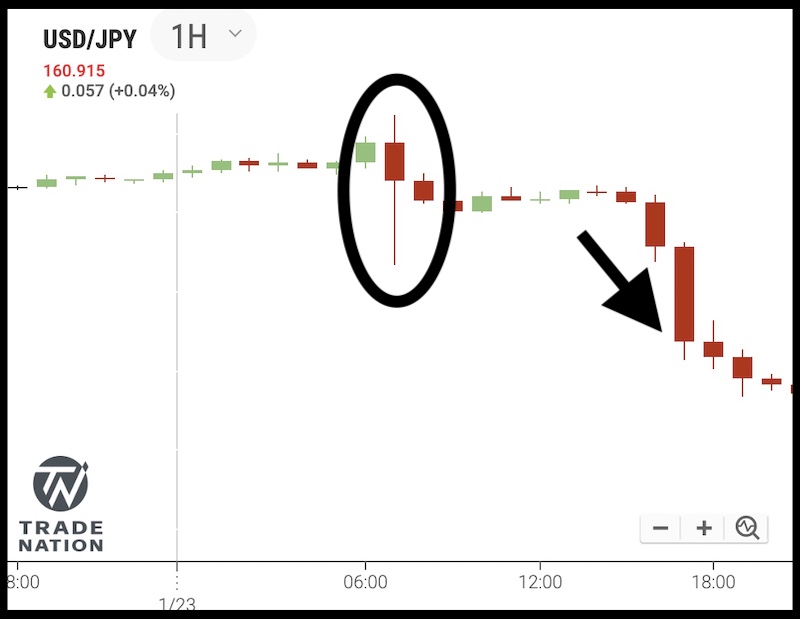
In January this year, suspected action from the central bank caused this sudden jolt and subsequent fall on USDJPY …
Here’s what it did to the USDJPY …
We can’t hope to predict the effect that the Bank of Japan’s wranglings will have on the markets in the middle of the night, so we need to watch our economic calendar and avoid being in the market close to any economic announcements.
Finding the rhythm
The point is not that the Asian session is better than London or New York. It is different. The moves can be smaller, the ranges can be tighter, and the pace can feel slow compared with the main Western sessions. But that is exactly where the opportunity lies. If you are prepared to adapt your strategy — fading gaps, marking opening ranges, waiting for pullbacks and respecting the session’s quieter rhythm — the small hours can offer clear, repeatable trading opportunities. You don’t need the market to be wild. You just need it to be readable.