October 2, 2015by Mark Rose- 0 comments
Breakout vs Range Trading

Some traders look for breakouts … some look for retracements … some like to look for range-bound markets … some like to ride trends …
A lot of this comes down to personality.
But it can also be what we happened to pick off the shelf when we looked for a trading system that was working well.
There’s no doubt that some breakout and range systems work … and some don’t … but is one fundamentally more likely to do well than the other?
So, if we pick the wrong type of system, are we immediately putting ourselves at a disadvantage?
Last week I looked at how trading times can affect our success at traders – now, I’ll link that up with which systems work at which times, so you can make sure you’re matching your strategy to your trading window.
Breakout vs Range Trading
There’s something very appealing about trading breakouts.
If the price is stuck in a range, we know for certain that it can’t stay there forever – the price will always, at some point, move out of that range.
And when it does, it often moves with some momentum.
The price might jump tens, or even hundreds, of points in a very short space of time – and what better moment to be in the market, scooping up all those lovely profits?

The lure of the breakout is what makes us seek out volatility … it makes us use wide profit targets, or trailing stops … and allows us to dream of immense profits from a single trade.
I don’t know about you, but I’m getting a warm glow just thinking about those profits!
Now let’s look at range trading …
If breakout trades are the extroverts of the markets, then range trades are the introverts.
While the breakout trader looks for a price that’s confined by levels of support or resistance, and waits for it to move beyond those … the range trader plays the ping-pong game as the price bounces between key levels.
These price moves tend to have less momentum and be less dramatic, so our range trader will probably have more modest profit targets than the breakout trader, and a lower risk-reward profile.

As you can see from the chart above, the range trader needs a wide enough stop level to cope with false breakouts, and his profit target needs to take into account that the price may only move two-thirds of the way to the retracement level.
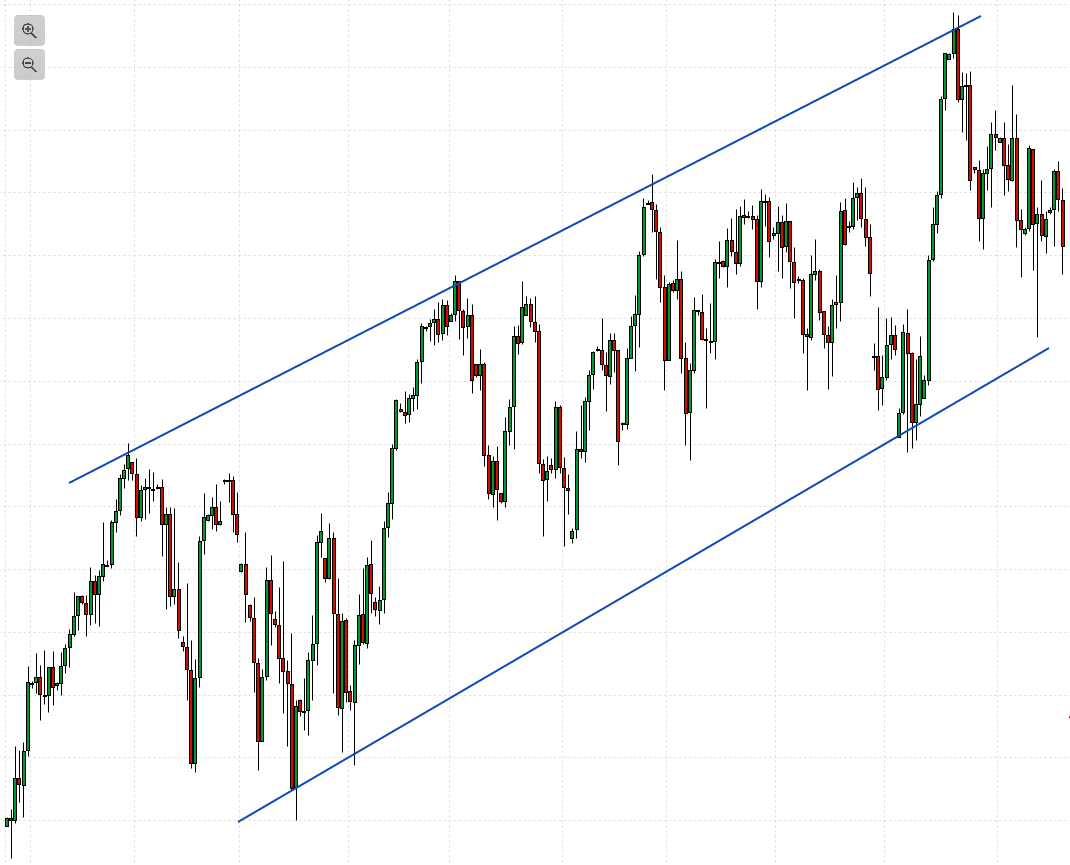
Of course, ranges don’t have to be horizontal lines – the range trader can follow the up and down swings in a trend …

Ranges can also be technical – based on Bollinger bands, pivot points or Fibonacci levels.
So, we have two very valid approaches to entering a trade … is there any reason to think that one would be better than the other?
Let’s look at potential problems with each system …
1. False signals
All trading strategies will be plagued by false signals – they come with the trading territory, but we should do all we can to minimize them.
By definition, a range needs multiple tests of support and resistance levels to qualify as a range. A breakout of a range will only happen once.
Therefore, we have to assume that statistically there will be more bounces than breakouts, which tells us that breakout trades are likely to have more false signals than range trades.
This gives the first point to the range trader.
2. Risk-reward
A breakout trader can neatly tuck their stop level behind the breakout price, and will be expecting an explosive move, with a significant profit target. The result is that they may be trading with a profit target twice as wide as their stop distance.
By contrast, the range trader will be looking for a more modest move – perhaps two-thirds of the way across the range, and they need to set a stop that won’t be hit by false breakouts. Therefore they are more likely to be trading with a 1:1 risk reward ratio.
This one goes to the breakout trader.
3. Chances of success
The breakout trade is all about catching the ‘big move’. But given the number of trading ranges – the occurrence of that big breakout move is relatively rare.
Breakouts are the trading equivalent of playing the lottery – hoping for the big win.
Meanwhile, the range trader is picking up the small, steady payouts.
Two-one to the range trader.
4. The stats: who’s actually winning?
I’d like to do a quick recap on the information we uncovered last week, about trading times …
The snapshot of GBPUSD trades showed traders having more success trading the smaller pip moves in the evening and night-time sessions. Those traders who focused on the peak volatility (the start of the London and US sessions, were significantly less successful.

What we see here are the range traders – who favour quieter markets – gaining an edge over the breakout traders – who favour volatile markets.
Here’s an example of prices bouncing neatly between pivot points overnight, before shooting of at market open come 8am …

And here we can see GBPUSD bouncing neatly between its Bollinger bands between 8pm and 6am London time …

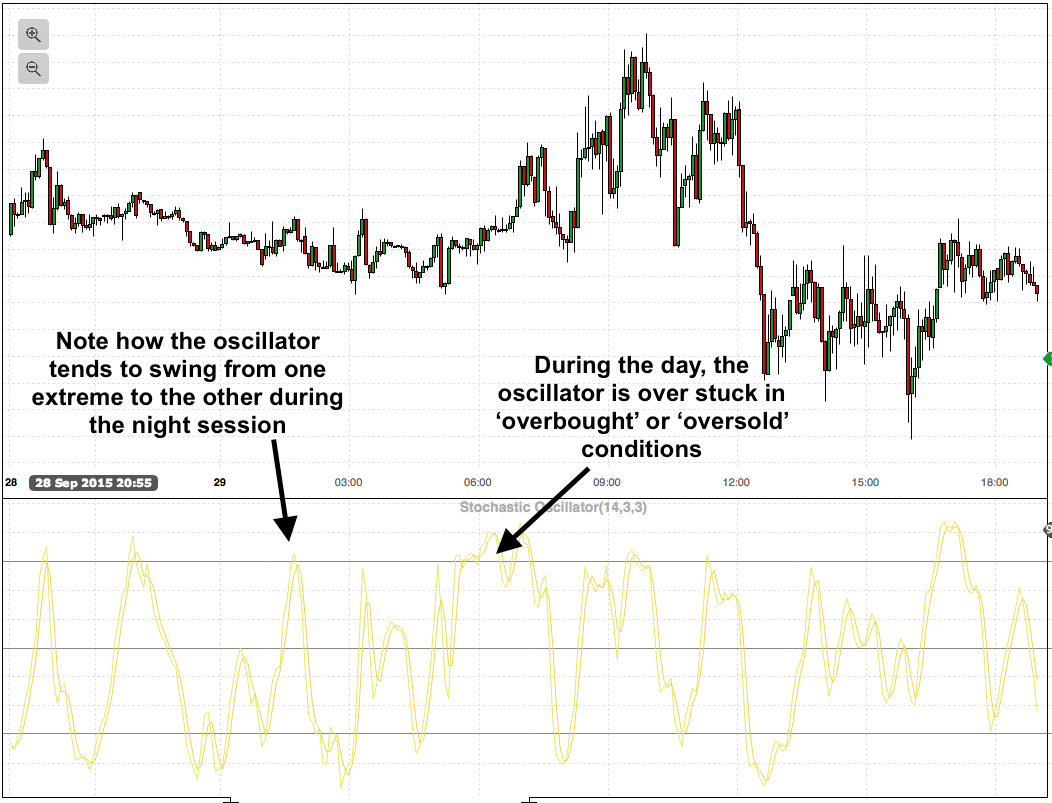
Another favourite indiciator of the range trader is the overbought–oversold oscillator.

Those of you who’ve traded with me for a long time will know that my own preferred trading method is based on a technical range. Unfortunately, due to my very conventional sleeping patterns, I’ve not done much trading of the strategy overnight. However, that’s all changing.
I’m currently working on an automated version, and am running tests on the best times on the best markets. It’ll be a few months until I can release the data, but hope to have some facts to share with you in the next few months.
To enjoy more content and get it faster
Save
Save