June 24, 2016by Mark Rose- 0 comments
Brexit financial crisis? That’s not the half of it …
Back in January, George Soros predicted that this economy was due for a ‘hard landing’, that would take down its currency.
If this happens, it will have repercussions across global economies.
And events this month suggest this looming disaster is fast approaching.
No, I’m not talking about the UK referendum …
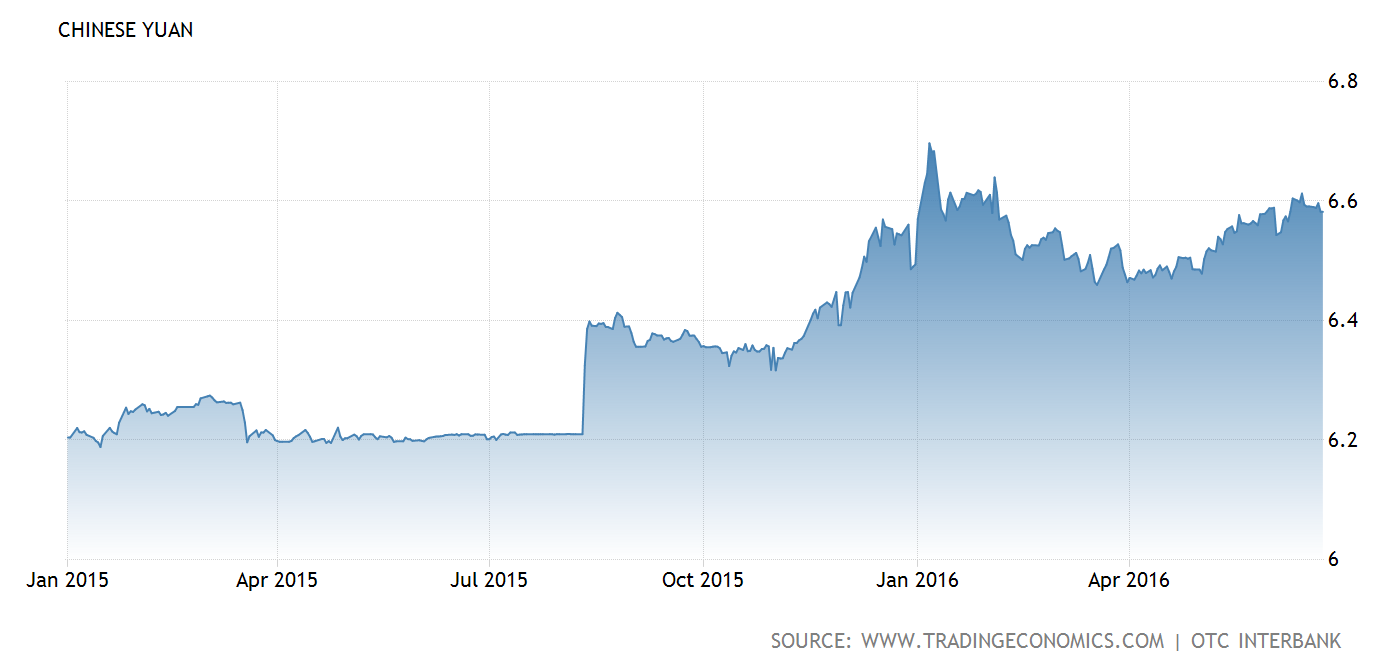
Soros is betting against the Chinese economy, and the value of the Yuan (or Renminbi, as it’s also called). The currency has fallen around 6% against the dollar since this time last year …
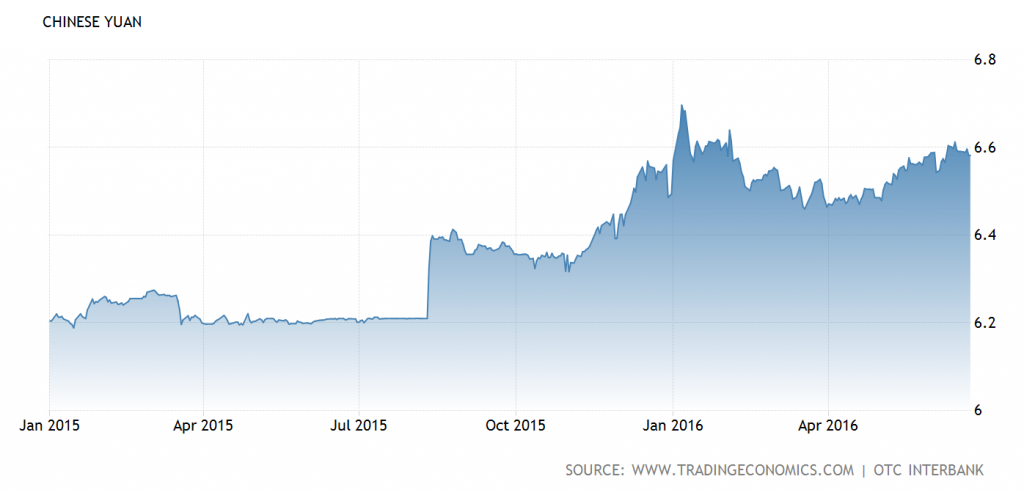
And all the fears that rose back in January haven’t gone away – markets have just been looking the other way.
The accusations being thrown at China by Donald Trump and his like are that they are manipulating their currency to boost trade. And currency manipulation is a trick that few countries don’t play (take a look at the Fed decisions on interest rates) …
As the UK is just waking up to discover … the cheaper your currency is in relation to others, the cheaper your exports will be to them. And the more expensive imports from abroad will be. The result is that your export market is boosted … your population is more likely to choose domestic products over imports … domestic job market is boosted.
A devalued currency looks like a great idea all round – or does it?
Japan have been trying to devalue their currency for years. Their justification is that the Yen is overvalued due to its status as a ‘safe haven’ – and events overnight have seem money flooding into the Yen again, with the 100 level broken, which means the Japanese economy is at an unfair disadvantage when competing abroad.
So an overvalued currency is a bad thing.
But does that mean that an undervalued one is necessarily a good thing?
Let’s look at the evidence in China …
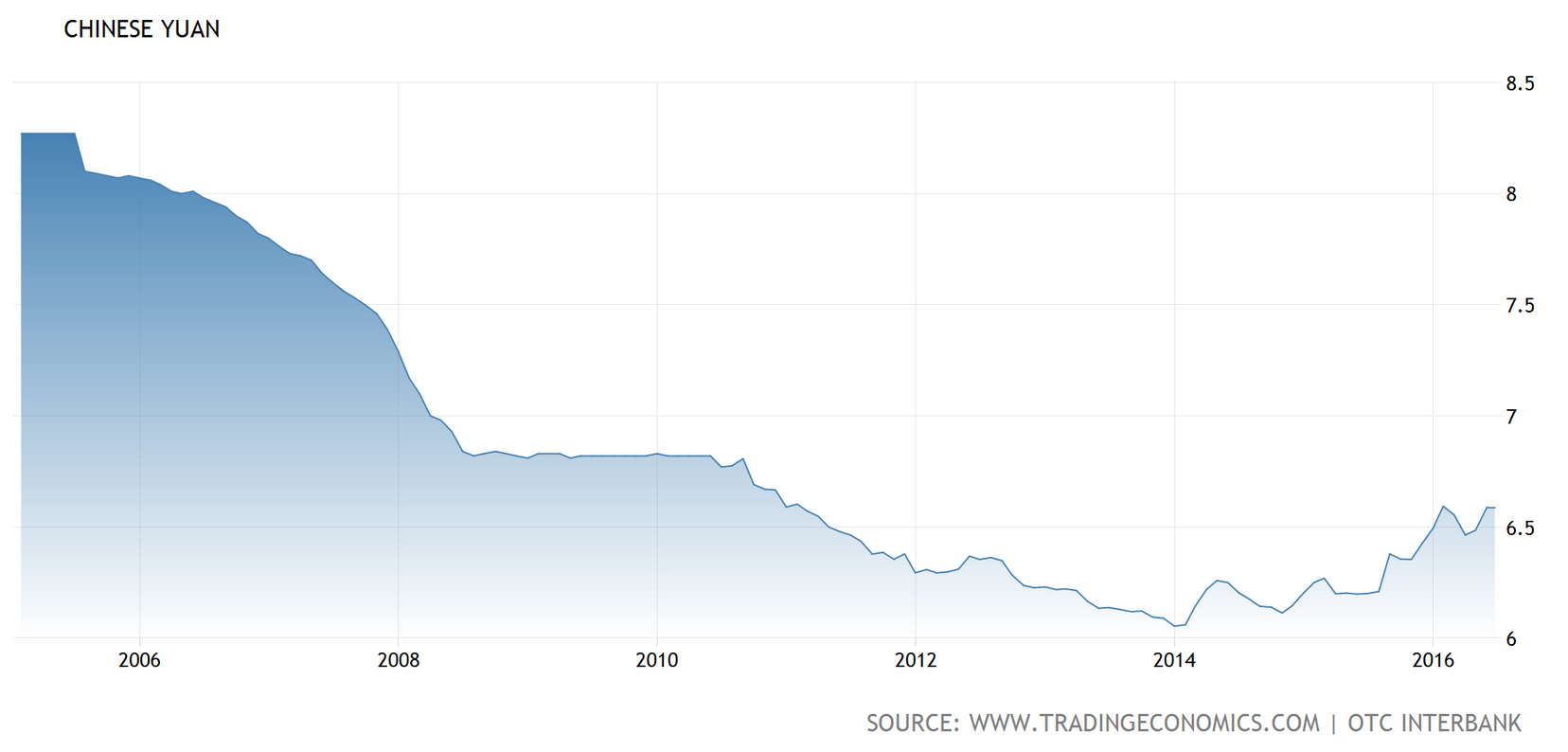
The Chinese government has recognized that an isolationist policy may give them cheap currency, but isn’t the route to a strong, internationally stable economy. And, after significant international pressure, the Chinese central bank has allowed its currency to massively appreciate since 2005, when its exchange rate was fixed at 8.27 yuan to a dollar …
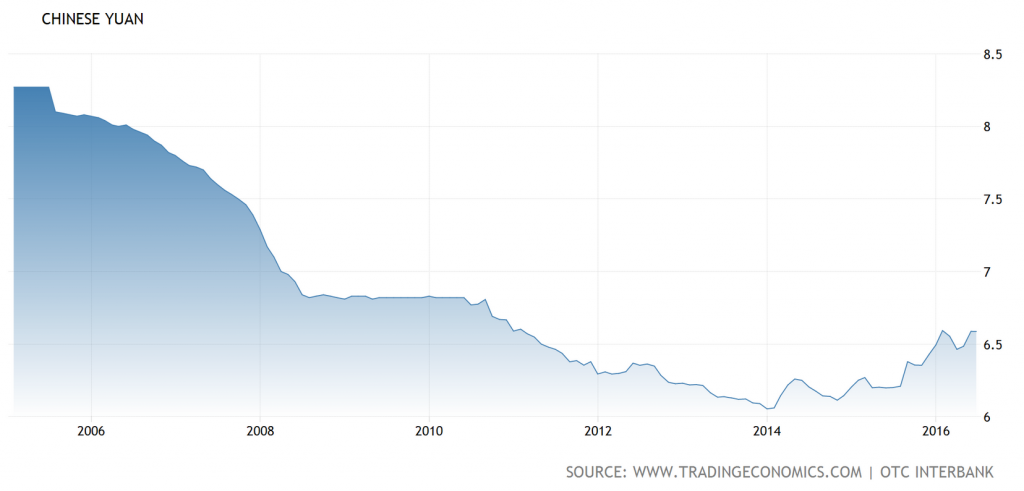
To most Chinese economists, the 36% appreciation from 2005 to 2015 would seem like proof that are releasing the reins on their currency manipulation.
Many Chinese exporters have had to shut down in China and relocate to Vietnam or Bangladesh, resulting in lost jobs in China.
Dollar strength means that the yuan has appreciated even more against other currency, meaning that customers in other markets could be paying even more to import from China.
Is the yuan still undervalued? Maybe.
But China has a bigger problem, which really highlights how a devalued currency isn’t the golden ticket some believe it to be …
China is hemorrhaging money. It’s estimated that in 2015, China had capital out flows of $1 trillion. And in the first quarter of 2016, another $175 billion left China. No body – including Chinese savers – want to be holding yuan.
To halt this flow, the central bank has tried to restrict capital outflows, and has been using up its massive foreign exchange reserves to help stabilize the currency – nearly half a trillion dollars so far.
But the problems that spooked investors in January haven’t gone away.
And the evidence lies in a way that Chinese savers can anonymously get their money out of yuan: the bitcoin …
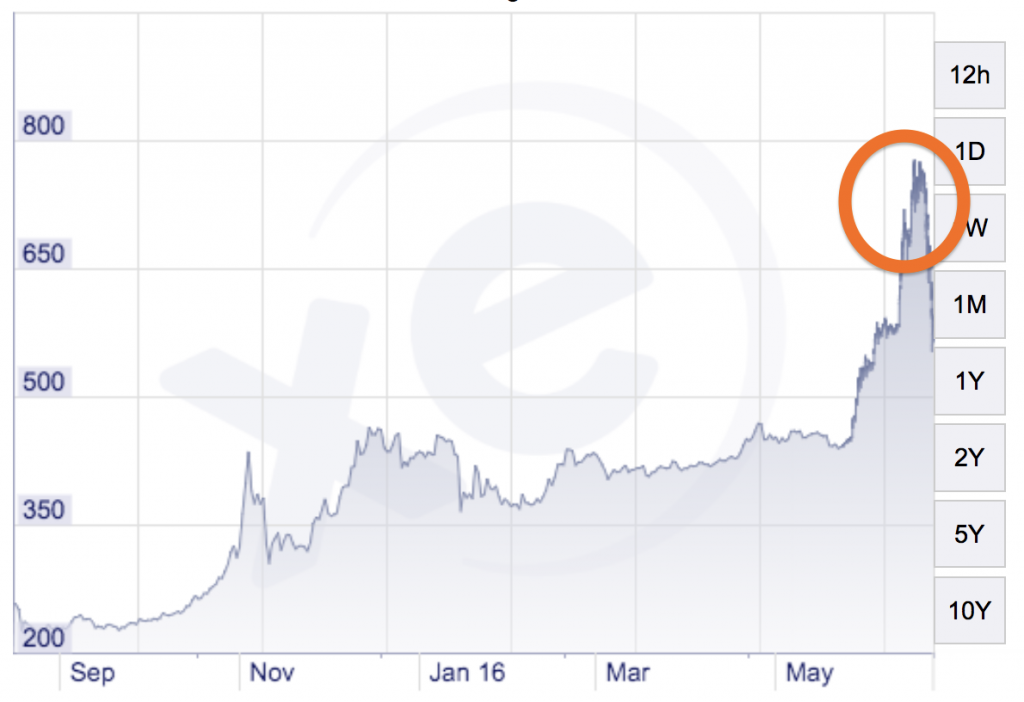
This month has seen the bitcoin hit two-year highs, and many credit this to rising Chinese demand for the digital currency.
Demand for the bitcoin has increased in line with Chinese government restrictions on moving yuan out of the country. And this presents a serious problem for China – anyone can anonymously transfer their savings into another currency, making traditional currency manipulation tools redundant.
The People’s Bank still have more than $3 trillion of foreign currency to spend in boosting the yuan – so we can expect this story to rumble on for a while. And, unless your pockets are as deep as George Soros, I wouldn’t bet against the power of the Chinese Republic just yet.
So, with turmoil in Europe and an impending crash in Asia, we’ll have plenty to keep us busy for the future. The only change is that instead of blaming it on Brussels, we’ll blame it on Bejing.
Save