March 8, 2013by Mark Rose- 4 comments
How to trade and keep your day job
This week I want to show you a couple of trades that the long-term strategy I’m following has taken recently.
They are trades that got in early (but not too early) in a trend and took advantage of some serious movement on our price charts – I think you’ll find them very interesting.
But before I show you those, I want to look at a question that I’m often asked by new traders who are keen to get started in the markets: How can I trade seriously, while still holding down a 9–5 job?
They are worried that they can’t watch the markets closely enough when they are away from their charts for long periods.
And that they might miss the best opportunities.
But they also realise that they need to keep the security of a regular income, while they build their knowledge of the markets.
The truth is that this is a “non-problem” – it’s a problem that doesn’t really exist, except in our perceptions of what “trading” should be.
We’ve been fed the idea that we should be watching charts and signals all day, looking for opportunities.
Traders who do just that will be jumping in and out of trades regularly.
And their brokers will be doing very nicely out of it.
The solution for traders who want to trade once a day … or once a week … is simply to follow longer timeframes. That way, when you get home from work, the charts are still on the same candlestick they were on when you left this morning!
Day, Swing, Position – different timeframes explained
Day trading: is short-term trading, where a trade might last anywhere from a few seconds to a few hours.
Swing trading: is medium-term trading, where trades usually last a few days, but sometimes can run for several weeks.
Position trading: is long-term investing, where trades will last for months, or even years.
In fashion terms – day trading is top of the table. As I’ve mentioned in recent weeks, most of us have relatively high-speed internet connections, which give us almost instant access to market prices, and ability to buy and sell major markets.
This means that we can trade just like they do in the movies – making winning trades in a matter of minutes.
It’s exciting. But is this really where the money is?
Sure, you might make a few hundred pounds in the space of a morning … but you could equally end the same day in the red.
Meanwhile, the position trader closes a single trade after six weeks, pockets a few thousand pounds from it – and has barely lifted a finger in the whole process!
The tortoise and the hare
Position trading is often confused with buy-and-hold investing, where a stock is held on to for years, through thick and thin.
However, the position trader will buy and sell markets, following long-term trends up or down – these trades will be held on to through minor retracements, with the expectation that the trend will resume, unless otherwise indicated.
There are some very important reasons why position traders use this method:
• This is the most forgiving type of trading.
• Small mistakes are more easily absorbed.
• The size of the profits on each trade can be huge.
• A high percentage of position traders become profitable (compared to most day traders, who lose money).
• It is less stressful than day or swing trading.
• It can make larger profits from smaller stakes.
• It is easier to predict long-term market trends than short-term fluctuations.
• It is less time consuming than other types of trading.
To give you an idea of the kind of moves I’m talking about, here are a couple of position trades that have been indicated by the strategy I’m currently following …
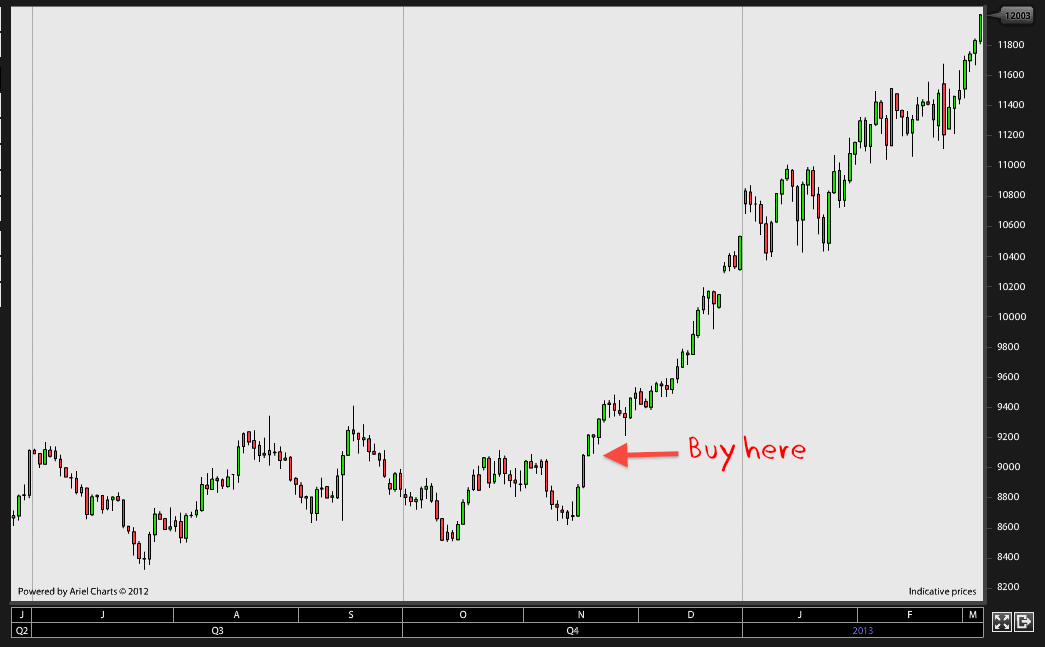
This is a buy signal on the Nikkei at the end of November last year …

And this was a signal to sell Cable earlier this year …
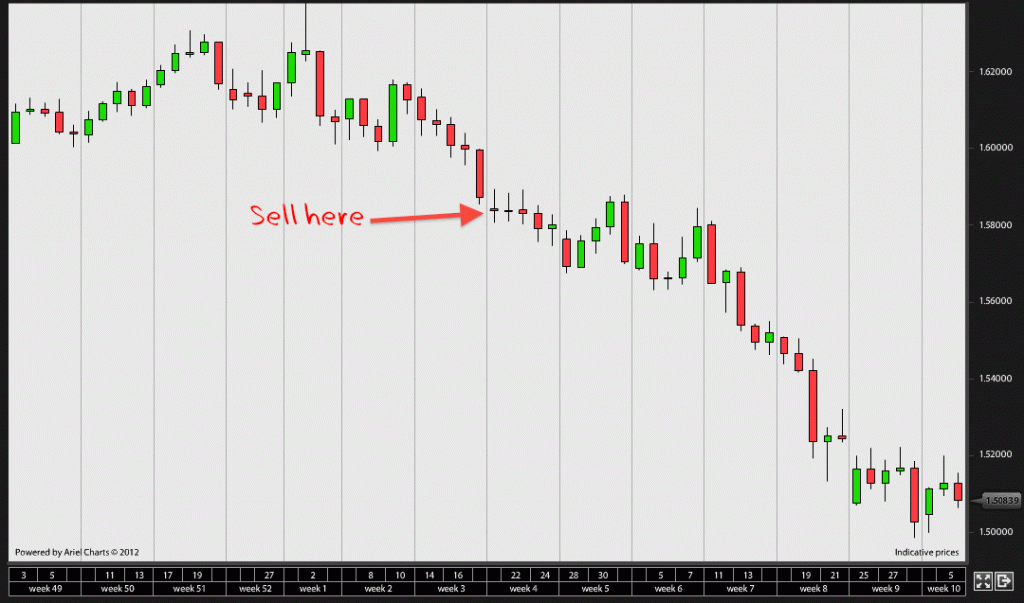
Both signals were followed by significant moves of over 100 points.
And the work involved?
Checking a weekly candlestick chart on a Monday morning – that’s it.
(If this sounds interesting – I’ll be bringing you full details on how to get in on these big moves next week, so please watch out for my email.)
Learning to chill out …
While there’s no doubt that position trading is one of the most profitable trading methods, if you’ve been jumping in and out of the markets like a hare – it’s difficult to suddenly slow down to tortoise pace!
The position trader needs to be able to sit back and wait for the market to do its work. Patience like this can be tougher than it sounds – especially if you’re used to day trading, and getting an almost instant win/lose result on your trades.
Personally, I still get my fix of instant gratification from my day trading, but only while my long-term investments are working away behind the scenes.
And, I can’t kid myself, in terms of the effort/reward – the position trades are hands-down winners, picking me up serious moves, while I learn to relax!






4 comments
Joao
Hi Mark,
I’m new into this world as I’ve only, very recently, started studying this subject and I must say that you’re brilliant!
You can turn what seems to be very complicated into a very “user friendly” explanation! 🙂
Thank you!
All best,
Joao
Mark Rose
Hi Joao,
Thank you, that’s very kind of you to say so.
Regards,
Mark
mahamond
Hi
Your posts are brilliant in being informative/educational.
I am having difficulty opening your graphs every time. The borderline for the graph is present but no graph opens/can be opened/viewed!
Regards
Mahamond
Mark Rose
Hi Mahamond, Thanks for the feedback. If you’re having trouble viewing the emails, click on the “view this email online” link – which should take you through the website. If you’re still having problems with it, please let me know and I’ll check out what’s going wrong. All best, Mark