February 9, 2018by Mark Rose- 0 comments
[QUIZ] Are you a system hopper or an adaptive trader?

Meet the system hopper … he trades one system after another, tossing one aside in search of ‘the Holy Grail … if a system isn’t working, it must be fatally flawed, and a new one is needed … the system hopper loves discovering new indicators, which will get around the weaknesses in ones he’s used before … and, much to his frustration, he has rows of trading manuals weighing down his shelves, all of which are now discarded as useless.
He may have paid for training … yet he’s never consistently made money from his trading.
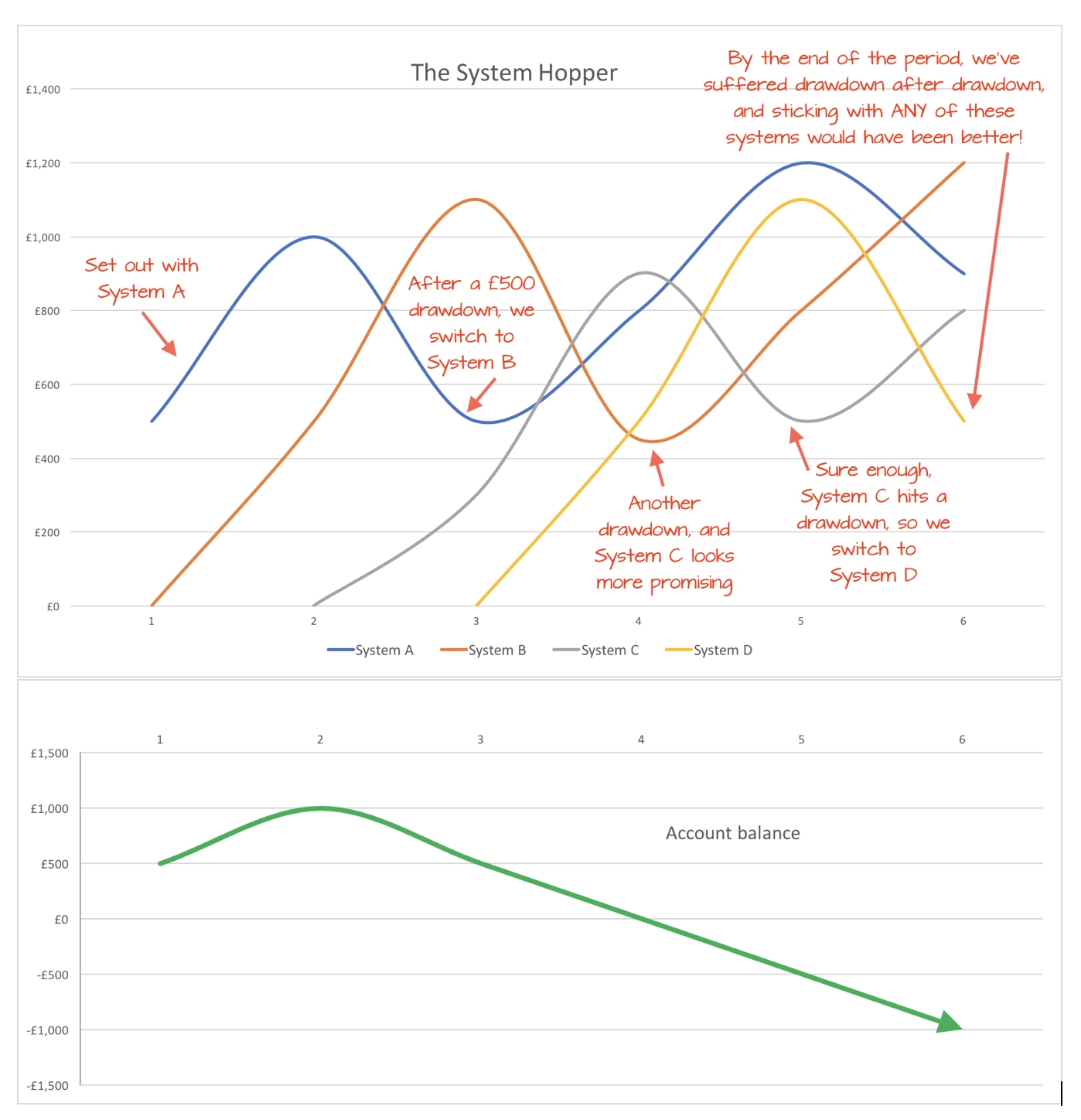
The result of this kind of trading is predictably bleak …
By jumping from one ‘top performing’ system to another, the system hopper keeps starting a new trading method just as its peaking at new highs. That way, they’ll often start just as a correction comes.
What follows are some losing trades, at which point our system-hopper rejects the system, and moves onto the next ‘hot’ method.
In this way, they lurch from losing run to losing run.
And it’s standard practice to blame the system hopper for bringing his fate on himself.
But blame doesn’t do a lot to help those traders who fall into this trap. If you want to break this kind of cycle, then it’s important to work out what drives this behavior … And the reality is that the process of system hopping can feel very logical:
- you’re testing lots of methods,
- you’re keeping abreast of new developments,
- adapting to market conditions,
- you’re learning all the time,
- you’re cutting your losses when it doesn’t go to plan,
- and you’re being cautious about the results that others claim to be getting …
Why do we chop and change?
One of the primary reasons that traders switch from one method to another so readily comes down to a lack of faith in the systems we’re using.
Often we’ve bought into a method, built up with lots of hype … and when it doesn’t fulfill those expectations, we’re left feeling cheated.
Of course, those headline figures are there to grab our attention and to motivate us into action, just like the beautiful, healthy people on gym membership posters … but it’s important to also look beyond those at a more detailed breakdown of the ups and downs a trading system has (if this kind of breakdown is not published, or doesn’t appear when asked for – then I’d recommend you steer clear).
Having realistic expectations is vital if we’re not going to get completely dispirited when we take a few losses. But we also need to have faith that the past results we’re looking at are genuine.
Some published results don’t include trading costs … or just aren’t achievable in the real world, because they demand that you place your trades in fast-moving markets and don’t take into account the slippage that real traders will suffer.
That’s why you should always look closely at results, and test a system yourself in demo mode to see how it functions in practice.
So, now we’ll assume that you’re trading a system in which you have a clear understanding of past performance, and you’re confident that it can work.
But, what should you do when performance slips?
All trading methods will have their ups and downs. As we’ve seen this week in the markets … trends suffer from corrections, and traders have to take some losses.
So, how do we know the difference between a bump in the road, and a trading method that’s just stopped working?
The reality is that we can’t.
But, if the track record is substantial enough, you should have enough faith in the system to want to find out.
If losses are becoming uncomfortable, we should either reduce stakes or switch into demo mode. It’s very possible that market conditions at certain times will not suit your trading method (some are more suited to trending markets, some to range-bound markets, and most have a volatility ‘sweet spot’ in which they function best), so hunkering down like this to preserve funds can be a good call.
This way, we can watch performance, without the stress of losing money. Yes, we could miss the beginning of the next winning run, but we won’t have depleted our funds while waiting for it.
So, when are we allowed to change our trading styles?
I’ll fully admit that I’m no longer trading the first trading method I tried. In fact, there are many that have fallen by the wayside.
Why?
Maybe they haven’t suited my trading style or my lifestyle, or the returns weren’t good enough for the effort. These are the kinds of things we find out as we’re testing systems. Or perhaps a new job means that we just can’t trade the New York open any more … so we have to look for new opportunities.
I’ve also cast aside trading methods if I’ve found that market conditions have changed, and – after considerable testing – I haven’t been able to maintain profitability.
But these aren’t changes that I rush into. And generally come after much tweaking and testing.
More often, adaptations come with new ideas for reducing risk in a trading method … avoiding over trading … locking in profits … or adding an extra indicator to the charts. And any adaptation must be fully tested before making a change.
The reality is that these processes (when done properly) are time-consuming, which is why many traders like to buy into a system where someone else has done the leg work, and is running these kinds of test … which brings us back to the issue of having full trust in how well developed a method is.
How confident are you in a system developer to fully test a strategy you’re using, and to bring in sensible adaptations, rather than rash changes?
So, now for the moment of truth …

 ARE YOU A SYSTEM HOPPER OR AN ADAPTIVE TRADER? TAKE THE QUIZ …