October 25, 2019by Mark Rose- 0 comments
Where to start with trading
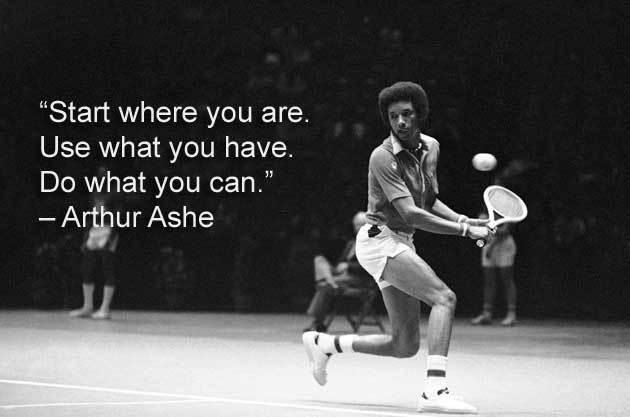
‘You have to start from where you’re at.’
There will
always be others who are starting ahead of us in the queue – people who got
lucky … who got a leg-up in life … who began from a privileged position …
It’s enough
to make most normal people wonder ‘what’s the point’?
What’s the
point in trying when we’re already so far behind?
What’s the
point in trying when my efforts are achieving so little right now?
What’s the
point in trying when others seem to find it so easy, with so little effort?
This is the
single biggest hurdle for people having success with trading – the feeling that
this is not for them … it’s for people who’ve already got lots of money … for
some kind of elite investor sect that ordinary people aren’t a part of.
One of the
reasons I set up Trader’s Bulletin was to prove to people that this didn’t have
to be the case – that there were ways in for ordinary people, with a little bit
of spare cash, and some big ambitions for it.
So, how do
you get started, no matter where you’re starting from?
I expect
most people are facing at least one of these hurdles, if not, all three …
- Not enough money
- Not enough knowledge
- Not enough time
How to start trading when you don’t have enough money
If you make
a 10% profit off a £10k fund – that’s worth having. If you make 10% profit off
a £200 fund – well, you might question whether it was worth the effort you put
in.
But we can
only start from where we are.
Feeling
financially powerless is a trap – it makes us want to blame others for our lack
of fortune. I look at my kids’ attitudes to making money – they’re just
not fazed by starting at the bottom. One of my sons, when he first started
secondary school, ran a nice little business selling sweets on the school bus
(until his mum cottoned on to what he was up to) – he realised he had captive
customers for around 45 minutes, so took advantage of them, and was bringing
home piles of pound coins each day.
The size of
your trading fund may be a measure of your wealth, but it isn’t the measure of
your financial power. Financial power is about a mindset that doesn’t get
overwhelmed by modest beginnings and numerous setbacks.
I find it
much more useful to think of profits in terms of percentage returns than the
money hitting your account. Focus on how long it’ll take you to double your
money (obviously returns are variable, so this can only be an estimate). As a
rough rule, divide 72 by the percentage
return you’re getting. So, if you’re making 5% a month, you can be looking to
double your money in less than 15 months.
Keep
doubling your money, and it doesn’t take long for the profit figures to become
very large indeed.
You can find specific tips on trading with small funds HERE.
How to start trading when you don’t have much market know-how
Some of the
most dangerous traders I’ve ever come across – the people who wipe out fastest
– are the ones who think they understand the markets.
If you
don’t know what the markets are going to do – you’ve understood the most
important lesson in trading. Because no one does know!
There is no
shortage of good, free trading information available online [link]. So start
small, and start learning. Using a demo trading account means that you don’t
need to risk a penny while you’re still finding your feet.
How to start trading when you have no time
You can
certainly spend a LOT of time trading. You can watch charts, study patterns and
try to predict what’s coming next.
Or, you can look for a daily or weekly signal … then place a
set-and-forget trade … and get on with your life.
Stats
suggest that traders who are LESS active, actually make MORE money.
Of course,
you’ll learn faster if you’re trading more – but if you wait until you’ve got
time to spend hours and hours studying charts, you’ll probably never get
started.
Getting
started is more important than creating the perfect conditions to get started.
Yes, we may
wish for more favourable conditions. Our starting point may not be ideal, and
progress so far may be slow, or non-existent. But we have a choice – to accept
the circumstances and focus on doing
things … or to use the conditions as a reason for inaction.
We have the resources. It’s just up to us to make the decision to put them into action.
To enjoy more content and get it faster