Are high reward trades really possible? Or they just lucky outliers? What’s a reasonable reward-to-risk for a trade? 10:1? 2:1? 1:1?
Generally, I’m skeptical of traders who claim to be bagging significantly more than 2:1 reward-to-risk on a regular basis. There just aren’t that many of these kinds of opportunity out there.
But that doesn’t mean that these opportunities don’t exist … where you can push for massive gains with just a small stop distance.
You just need to know when, and how to make these plays.
The high reward trade set-up
Big reward-to-risk only comes from trend-following. If you want to trade reversals, you can expect a higher success rate, but a much lower reward per trade, compared with the risks you’re taking.
So, we want to find a nice continuation pattern to get into a trade. And we’re looking for:
Clear trend direction
Tight consolidation (this gives us a short stop distance)
Explosive potential
Momentum
The first thing I’m looking for is a flag or pennant-type pattern, with a good long flagpole …
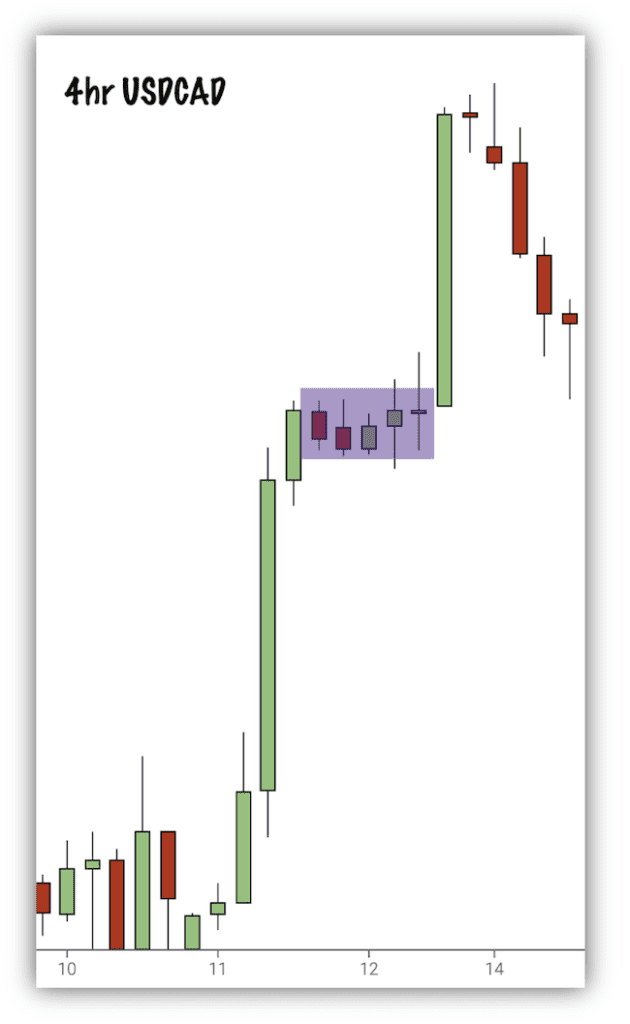
What we can see on this chart (above) is strong upwards momentum with the long green candles going into that consolidation pattern, which suggests we could see an equally explosive move out of the pattern.
And we can position our stop level just below the low of the consolidation, giving us very limited risk, but plenty of upside.
Here’s another example, this time showing a short trade …
Note that the breakout marked as ‘A’ on the chart above happened at the 7am start-of-day trading window, and our flag pattern is the first consolidation after this. This is a great place to get into a move, as all the traders who missed that initial move will be looking to jump into this trend, meaning there’s plenty of selling power to drive that downward momentum.
Scaling the moves
This trade setup can work on any timeframe. What’s important to look for is a differentiation between the size of the candlesticks going into the flag, and the size of the candles within the consolidation pattern.
On this 4-hourly USDCAD chart, we can clearly see a succession of long green candles moving into the consolidation, this shows us the momentum in the market. And the narrow range of the candles has two benefits – it hints that the move out could be explosive, but it also means that we can get a really nice tight stop in, maximizing our reward-to-risk.
Setting high reward trade targets
With these kinds of plays, I’d avoid setting a firm profit target, but instead rely on a trailing stop to get the most out of the trend. Sometimes these moves can yield as much as 10x reward-to-risk, so we want to leave the upside unrestricted.
I’ve got lots of ideas for smart trailing stops to lock in profits HERE, but even a basic automated trailing stop would work if you aren’t able to monitor the position.
And the final piece of the puzzle in landing these big-fish trades is … patience.
Watch and wait
These setups don’t come along all the time, but they aren’t unusual. By watching and waiting for the patterns offering a really good reward-to-risk, you really can hone-in on the best profit opportunities. We’re after long candles followed by short ones – a substantial flagpole, with a narrow range on the actual flag consolidation.
And remember – don’t be discouraged when we get it wrong. We’re trading with tight stops here, so will get caught out relatively often. But that powerful reward ratio means we can afford to be wrong, and the rewards can comfortably outstrip those losses.
I look forward to hearing about any big-fish trades you pull in with this technique.










2 comments
Adrian Burridge
Works on a 1 minute chart ??
Mark Rose
No reason why not, just be mindful of the size of the spread making that ‘tight’ stop not quite so tight.