August 17, 2018by Mark Rose- 2 comments
The truth about summer trading … and autumn trading …
Traders love a good ‘saying’ to help us in decision-making …
run your profits, cut your losses”
the trend is your friend”
when your barber gets in, it’s time to get out.”
And there are plenty of ‘wise words’ about when we should be in or out of the markets. The main one being ‘Sell in May and go away. Don’t come back until St Legers day.’
But there’s also the September effect … the Halloween indicator … the Santa Claus rally …
So, are any of these worth listening to? And, if so, how should we play them?
The thinking is that, generally speaking, markets make smaller gains (or larger falls) over the summer months than they do over the winter.
St Leger’s day is actually in mid-September, but with September being a statistically poor month for the markets, the ‘September effect’ suggests we should stay out until the end of that month …
Oh, and then October can be a dog too, so we should wait until the end of October (hence the ‘Halloween indicator’) …
We’re running out of months to actually trade!
The headline figures often quoted for this effect are from a 2012 study by Ben Jacobsen …

While it’s impressive to see 317 years of data laid out, you have to wonder how relevant the markets of the 1700s are to today’s markets.
Plus, these figures don’t include dividend payouts that would have been lost over those summer months.
Other studies which do include dividend payouts show a smaller difference between winter and summer, but it’s still there.
Why?
While traders are away on their holidays, we can expect volume to be thin, which can make markets more volatile. But that doesn’t really explain a loss of value, unless it’s sudden volatile downswings causing panicked selling.
Another theory is to do with end-of-year bonuses and first-quarter reports giving stocks a boost over the winter and spring.
So what effect should this difference have on our decision making?
If you’ve long-term long positions, and buy-and-hold shares, this can be relevant, but bear in mind the dividend payments you could be missing out on, and the costs involved with buying and selling shares.
If you’re spread betting, and can make money from market downs as well as ups, you may wonder what any of this has to do with you.
What we should be aware of is that low volumes at particular times of the year – summer holidays, plus other seasonal holidays – can cause markets to behave differently.
What does low volume do to our markets?
Less volume means less liquidity. So, for example, if there’s a load of sell orders, they’ll have a greater effect on the overall price, as sellers look to find buyers.
In general, if you’re spread betting huge global markets, like major Forex and indices, then there is always plenty of liquidity, so the differences in holiday periods can be pretty subtle, and easily upset by other factors.
The reality is that in 2018, we’ve seen high volatility since the start of the year, with summer months dropping off, but still relatively high, just continuing that rather directionless trend.
As a spread better, we generally don’t care whether the market is going up or down long-term.
We can profit either way. But if we’re riding trends, it does matter to us the kinds of moves the market is making.
If it’s very volatile, we can expect more dynamic moves.
It volatility drops off – we need to be able to react.
This is why I always urge traders to be aware of the Average True Range of the instrument they’re trading – an easy, simple way to gauge what kind of moves individual candles are making, so you can adapt your trading to match.
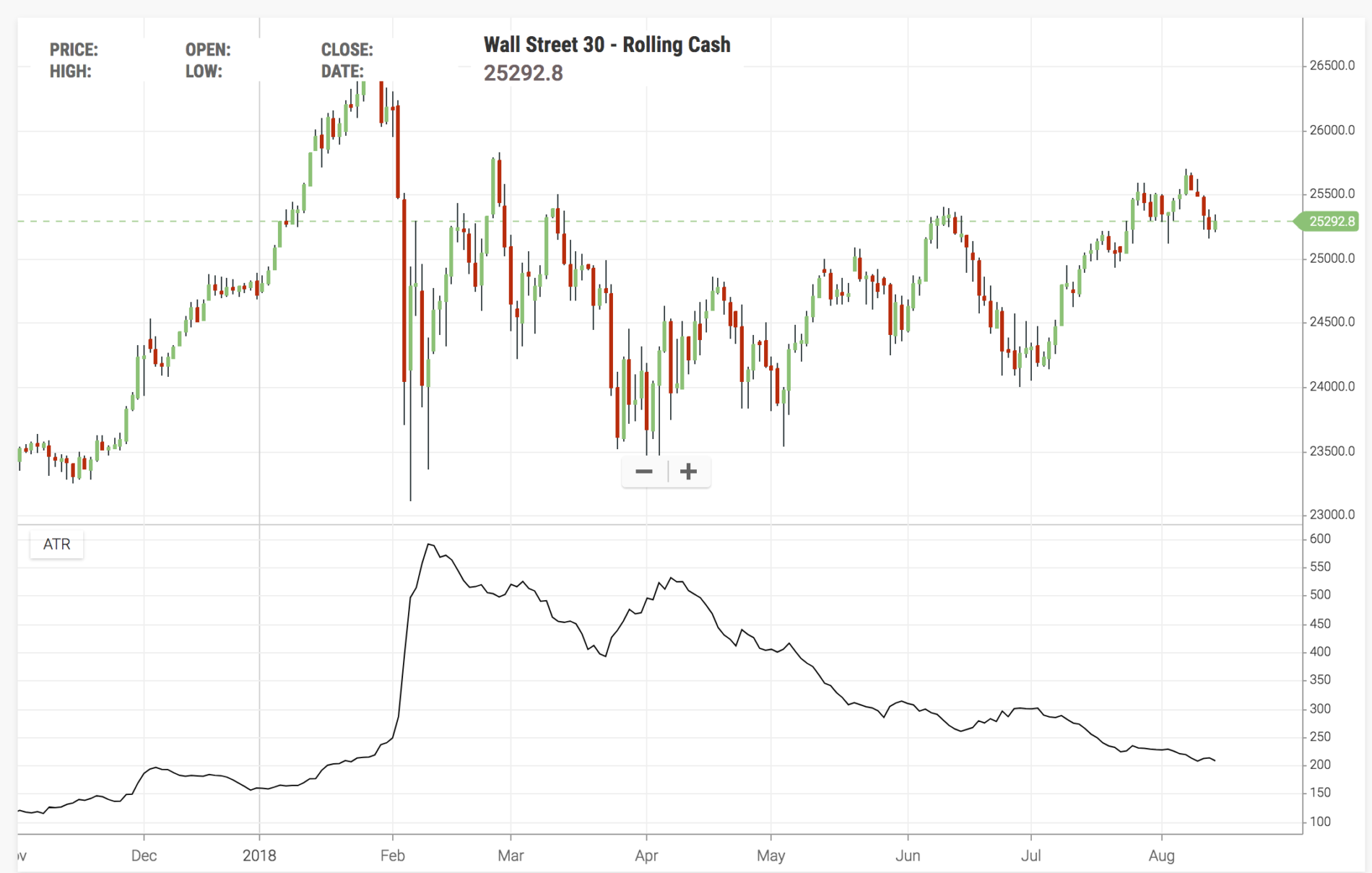
Here’s a daily chart of the Dow Jones, showing how the ATR has changed since the end of last year.

As you can see, the range shot up dramatically in the first half of the year. It’s dropped off over the summer, but remains high relative to the previous year’s norm.
Unfortunately, I can’t predict when market volatility will peak and trough. That’s for people with crystal balls. But we can build systems into our trading that will allow us to adapt with changing conditions – making us best-placed to succeed whatever the markets throw at us.
To enjoy more content and get it faster







2 comments
Mark Rose
Guilty as charged!
Tim Shelley
Disgraceful lack of knowledge shown here! Since the sell in May quotation refers to a horse race rather than an actual saint’s day, it should, of course be St Leger day, rather than St Leger’s day.