May 25, 2012by Mark Rose- 0 comments
Trading rules that actually work

Which trading rules can really help you?
There’s no shortage of “lists” of trading rules on the internet, but so many of them are full of fluff and truisms – we want trading rules that work. So, which are the ones that can actually be applied to your trading, day in, day out, that will really make a difference?
Here’s my list of 8 practical and simple things you can do right now to improve your trading …
1. Trade with the trend
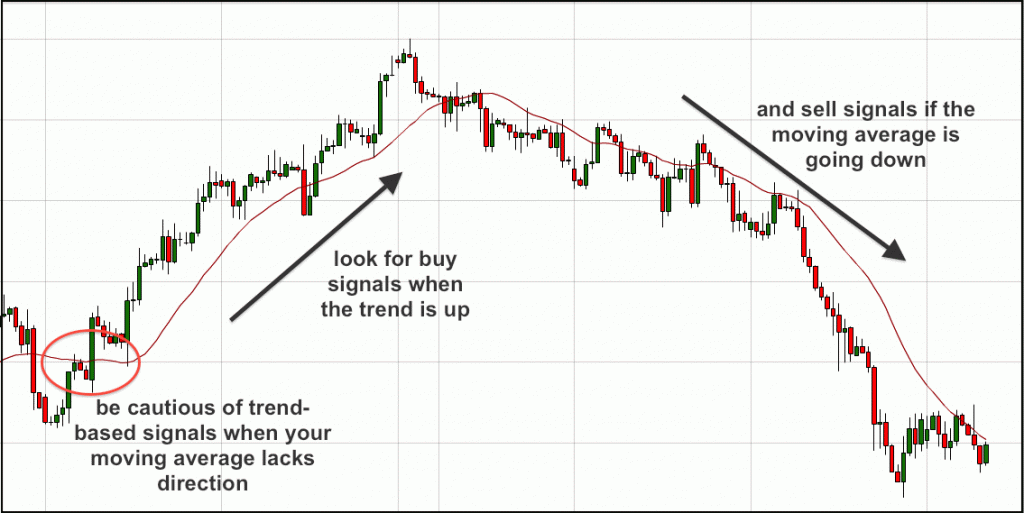
Okay, I bet you’ve heard that one before. But are you really always checking the over-arching trend before you put a trade on? The simple use of a moving average to your trading technique can ensure that you’re going with the trend.
If you add a 20-period SMA to your chart, and tell yourself that you’ll only trade with the market in the direction of that moving average, you’ll know that you’re always trading with the trend over that period. (The moving-average period you what to use will depend on your trading strategy and the timescale your trades run for, so have a play about with a few, to judge which gives you the best signals.)
2. Cut your losses
All trading strategies will take some losses – it’s part of the scenery of trading. And the “cut your losses early” advice is all well and good – but it can be hard to know exactly where to position our stop losses, and we’ve looked at various techniques in Trader’s Bulletin over the years that can help you to hone your stops.
But the simple rule I want to give you today will help to ensure that your losses never spiral out of control …
If you have 3 losing trades in a day, stop trading. That way, you’ve limited the potential downside you can have on any single day. Come back to the market the next day, fresh, rather than ragged and after revenge!
One of the biggest crimes traders commit is overtrading. Remember, that sitting out of the markets is an active decision. Sometimes we just have to sit on our hands and wait.
3. Don’t get too technical
It’s a common mistake to constantly try to new technical tools, instead of working to tweak our entries and exits, and to better our staking plans. You really don’t need to cover your charts with technical indicators – it won’t make you a more successful trader. Take a hard look at your entry level – could it be improved on? Could you use different profit-taking techniques? Take a look through some past posts on the Traders Bulletin site for ideas.
4. Don’t overstretch yourself
You no doubt already know that you should only trade with money you can afford to lose … and that you should never risk more than 2–3% of your pot on one trade … that you should always know your risk and have a stop loss in place … and that you should never, never widen your stop loss after you’ve set up a trade.
But I’m going to tell you a very simple way to know if you’re overstretching yourself risk-wise, without even having to calculate what percentage of your pot you’re risking …
How well do you sleep at night?
If you’re constantly worried about your positions, you are staking too high.
No single trade should be that important. Trading is a long-term game, keep individual trades small. You shouldn’t be looking for big winners, but for long-term wealth creation.
5. Don’t make your broker rich
Just like your car insurance company or your bank will take advantage of you if you can’t be bothered to shop around – your broker knows that you’ve got used to how their charts look, and how their package works. They know that many of their clients can’t be bothered to look at other companies, and once they’ve got your custom, they’ll take you for granted.
Shop around for your broker, just like you would for the best insurance deal. If you can save a few points on your spread, it can make an enormous difference to the profitability of your trading.
Likewise, look at the instruments you’re trading. If you’re trading obscure currencies or pricy commodities, question why? Could you apply the same techniques to a cheaper instrument. Some of the best price moves can be picked up on the cheapest instruments like EURUSD or the Dow Jones.
If you’re aiming to pick up 20 points profit on your trades, and you manage to save yourself 2 points in spread charges, then your trade will register a win 2 points sooner than otherwise. So you’ve just made your trades 10% more likely to win. This can make the difference between a winning and a losing strategy, so please don’t underestimate the value of shopping around.
Here are the two spread-betting firms that are currently top of my list, but I’m determinedly fickle, and will go elsewhere if I can get a better deal …
Capital Spreads: For some of the lowest trading costs about, plus a £100 offer to get you started!
ETX Capital: Not only am I loving their “trade through charts” platform, but I also like the fact that they offer a £300 safety net when you start trading with them.
6. Trade with a plan
If you’re trading without a plan, you’re making wild stabs at the market. Sometimes, these might come off … sometimes they won’t. But with no plan, you’ll have no idea of what is working and what isn’t.
At the bare minimum, your plan should include all the following information:
• Your entry criteria
• How you will exit for a profit
• How you will exit for a loss
• Your risk
If you can’t answer all these questions – your plan needs some work!
7. Diversity isn’t all it’s cracked up to be
While diversity can be a good thing, try not to be a jack of all trades. If you’ve lots of trades on the go, across lots of different instruments, it’s very difficult to keep check on how those trades correlate to each other, and how each instrument will behave in different market conditions.
Start out with one instrument, and build slowly as your confidence grows.
Every instrument has its own nuances … the times it’s best to trade … the kind of volatility you can expect … the daily range …. As you get to know your instrument, you’ll become a better and more profitable trader.
8. Don’t take a view on the markets
Sure, we all have an opinion on what the markets might do next, but don’t expect the markets to be logical. In fact, the markets are highly, highly emotional, which is why no amount of thought and logic will tell you what they are going to do.
Trade what you see in the charts, NOT what you think is going to happen.