November 29, 2013by Mark Rose- 2 comments
Why trailing stops could derail your trade

Trailing stops really sound like such a fantastic idea.
A dynamic stop level, that follows the price as you move into profit, locking in those gains as you go – what more could we want?
When trailing stops work – they can really boost our returns.
For example, they could turn a conventional trade, with a 1:1 risk-reward profile, like this …

Into something offering nearly 3:1 returns, like this …
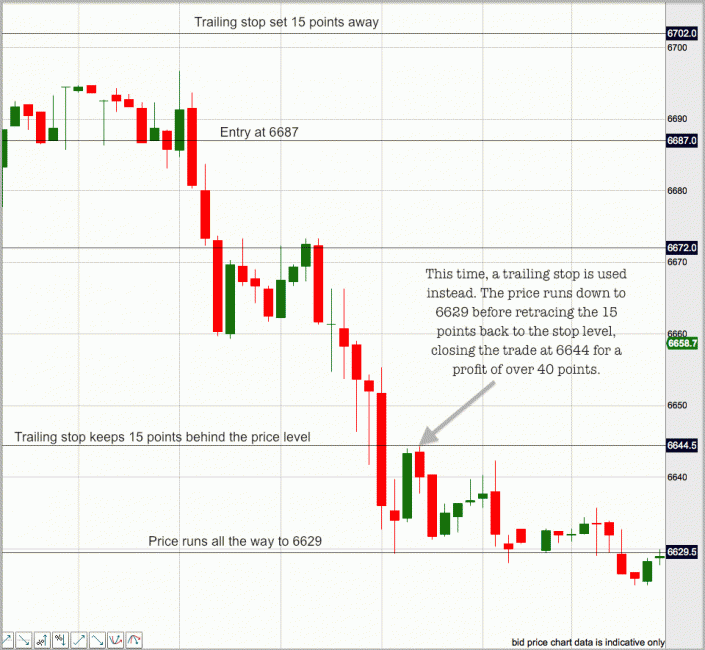
Each time the price nudges into profit, your trailing stop follows that movement. And, when we’ve got a strongly trending market, it can allow us to take advantage of those huge moves.
The benefits are two-fold: you’re protecting profits you’ve already made AND you’re leaving yourself in the market to benefit from further gains.
Sounds great.
So, why do so few traders use these dynamic stop levels?
And why, whenever I run tests on trailing stops, do they never have the meteoric effect on my results that I wish they would?
What’s wrong with trailing
The problem with trailing stops is that they are a very blunt instrument for managing trades. And, while they can produce positive results, if we could only make them a little more intelligent, we could have significantly more success with them.
These are the problems we’re facing …
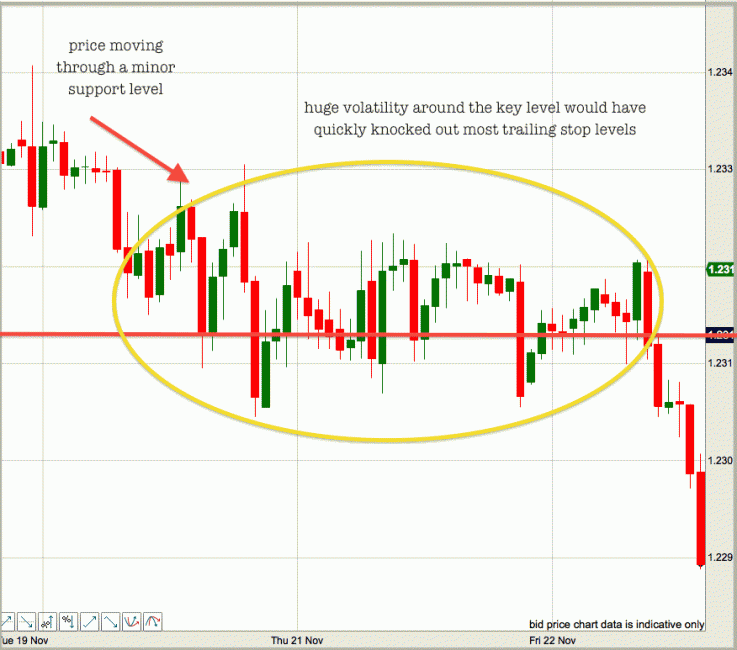
• Trailing stops blindly follow the price, which can leave us with stops at really bad levels, like just before a level of support/resistance. Key levels are notoriously messy – they are usually littered with traders’ orders, which means that prices jump around a lot, giving plenty of opportunities for our “unintelligent” trailing stops to be hit.
This chart shows the EURCHF moving through a relatively minor support level earlier this month – would you want to have a trailing stop mixed up in this price ‘mess’? It’s really not ideal.
• We’ve seen in previous posts how often prices have pullbacks and throwbacks – if you use a trailing stop, you can often get knocked out of trades by these.

• Trailing stops work best in volatile conditions when the market suddenly makes a big move beyond where we’d normally place our target. However, they also fare worst in volatile markets – where they get us knocked out of trades too easily.
So, despite their best intentions, trailing stops just aren’t doing their job as well as I’d hoped.
However, I’m being a bit unfair here …
There’s an important job that trailing stops ARE doing. A trailing stop allows us the luxury of asking “What if I let my position run?” And it offers us security from the “What if disaster strikes?” worry. And the value of this shouldn’t be underestimated.
This can prevent impulsive behaviour – like leaving trades open beyond their profit targets, or nervous behaviour, like closing trades early, before targets have been hit.
They can really help us manage our emotions through trading. So, perhaps trailing stops aren’t the villains I’m making them out to be.
But I’m still convinced that we should be trying to make them smarter.
What we need to make trailing stops work
In our ideal world, we’d have trailing stops that don’t apply until the market has made a significant move and I’m satisfied that the risk of a pullback is reduced.
In our ideal world, we’d have trailing stops that can be tied into technical data or price action – behind the last candlestick, or on the far side of a parabolic SAR, for example.
Unfortunately, unless you’re a whiz with your MT4 coding – this means that your trailing stops have to be manual, because there’s no spreadbet platform (that I know of) out there that’s allowing this kind of ‘intelligence’ to their stops. (Come on brokers – it really wouldn’t be that hard to do!)
But, in the meantime, if you’ve time to manage your trades, then there’s no reason why you can’t manage your stops too – moving them up to intelligent levels … locking in profits … and watching carefully for throwbacks and pullbacks before you do so.
And, if you don’t have time to actively manage your stops – then we just have to do the best we can with what’s out there. With certain trading strategies, basic trailing stops will improve results – but not all. Rather than blindly applying them to your strategy, monitor your results with them, and without, to see what works, and what doesn’t.
Save
Save
Save









2 comments
David Atherton (@adatherton)
Wider stops?
EdG
It’s reassuring to hear that other people struggle to make trailing stops work. Might take a fresh look at them with your comments in mind.